UNPUBLISHED GAMES
There are lots of unpublished
cycling games, of course, including some of my own. The first thing we must say
is that the word "unpublished" does not mean the same for everyone. As I see it,
"unpublished" means a game of which there is only one or a few prototypes. To
me, a self-made edition of 50 copies is an edition. (But then again, I come from
the world of experimental music...).
Since unpublished games are much harder to find, I do not follow here this
site's general rule of including only games that I have or, at least, that I
have had in my hands. Here you will find games that I have, gaves that I hace
seen, games found on the internet, and even games that were sold on eBay once
and of which I just have a picture, and of which I do not even know the name (if
they have one) or the rules. However, I think it is important to document
these games.
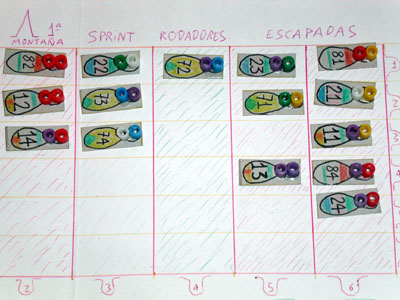
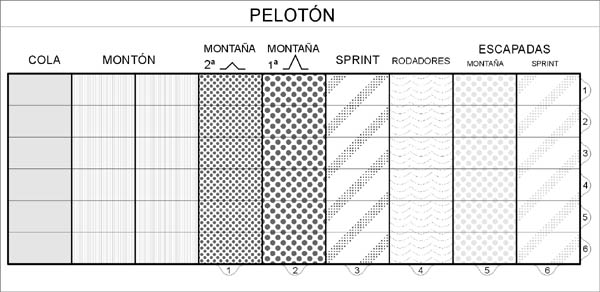
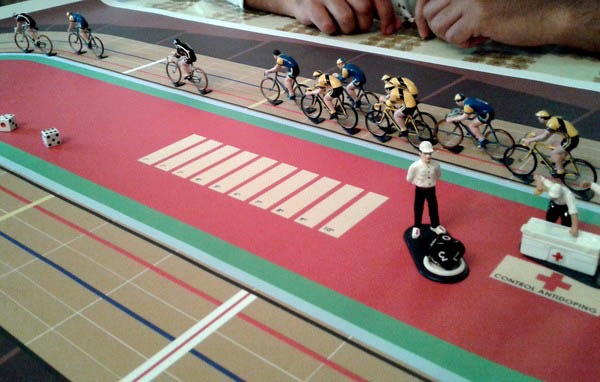
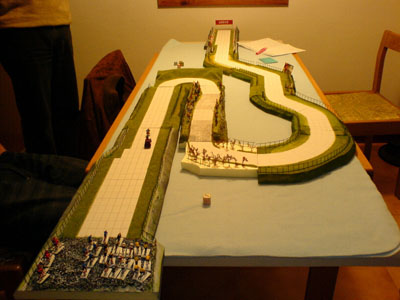
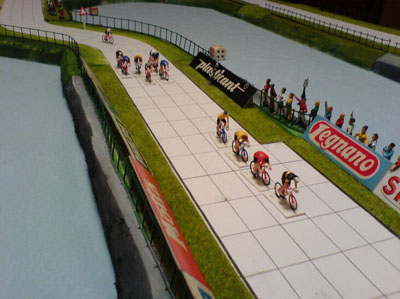
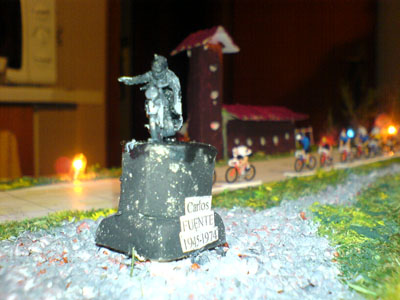
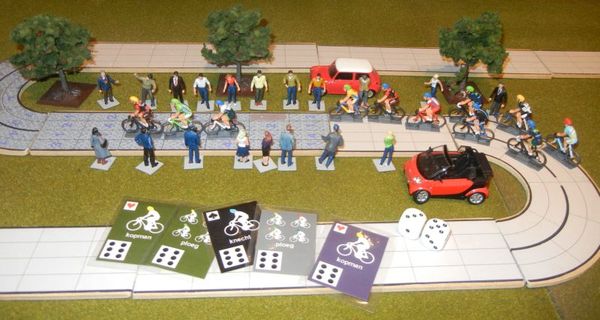
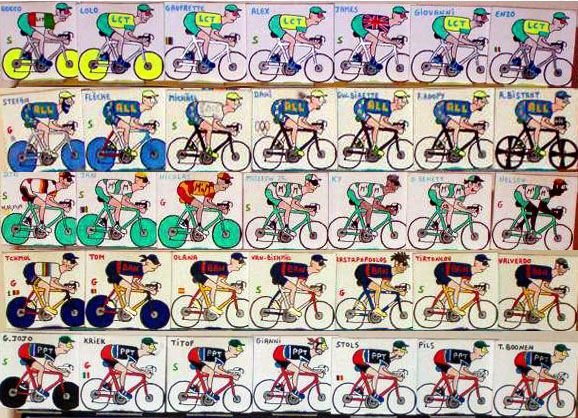
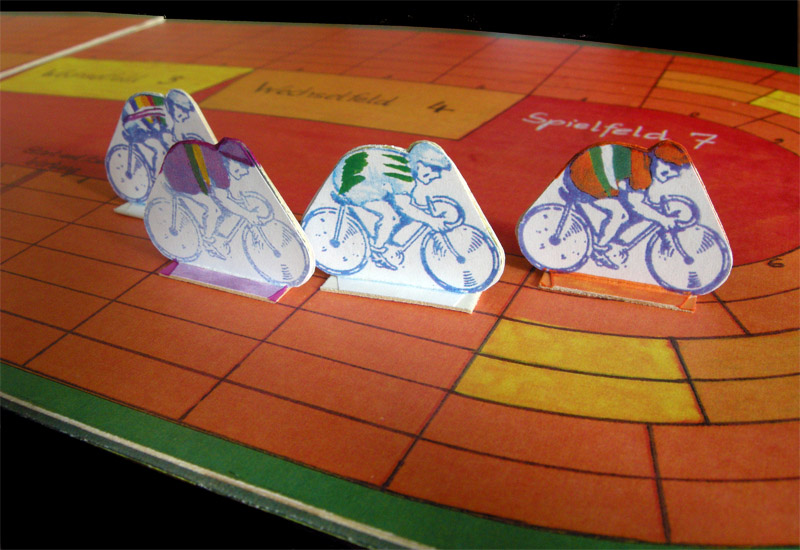
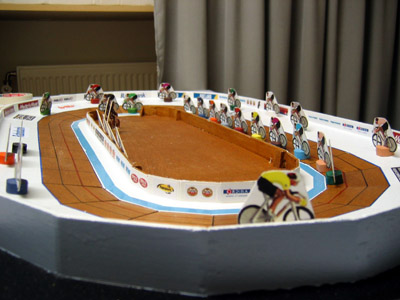
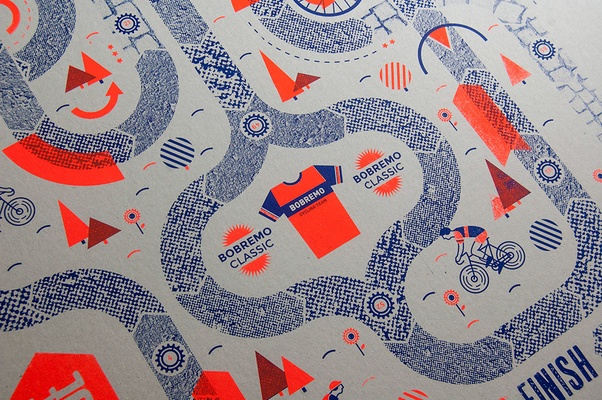
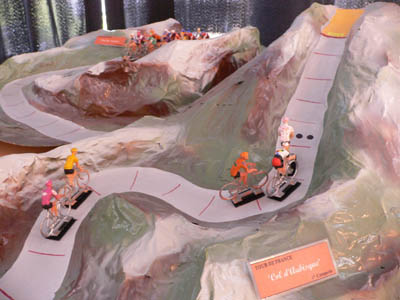
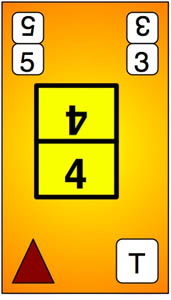
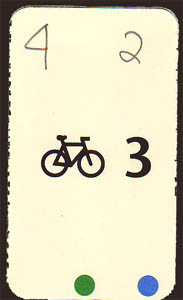
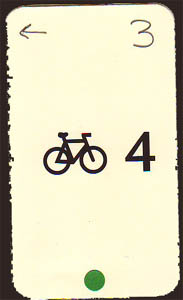
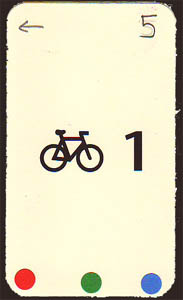
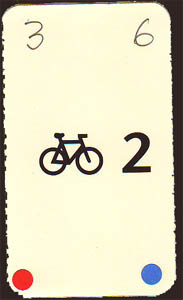
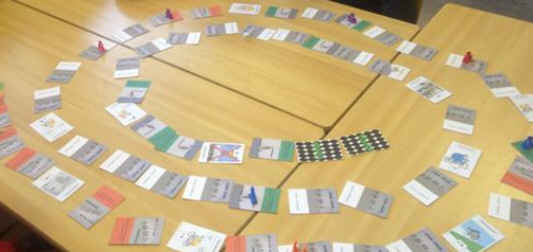
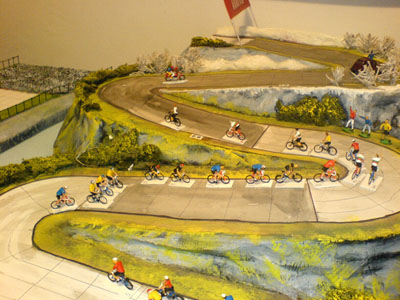
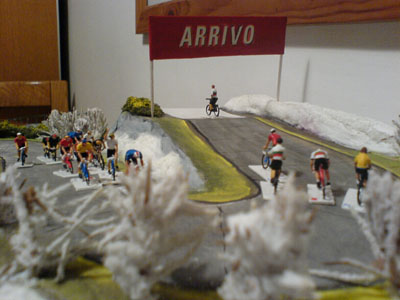
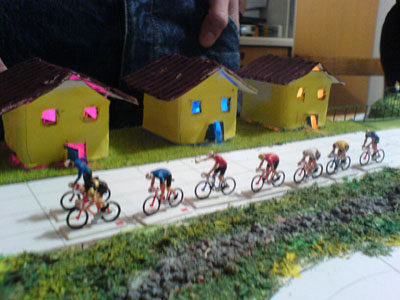
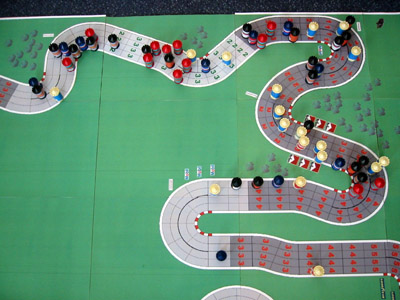
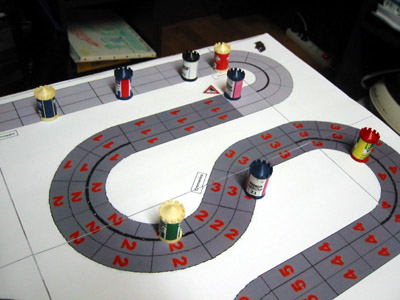
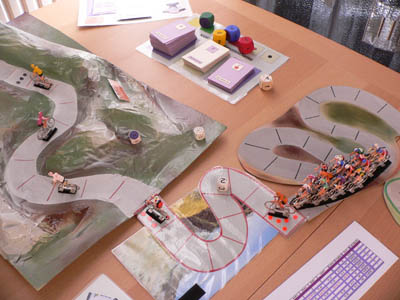
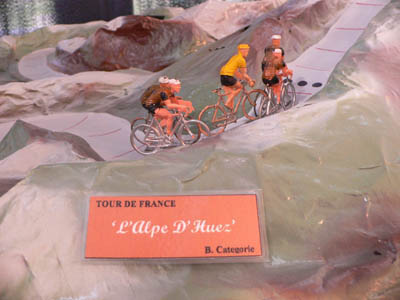
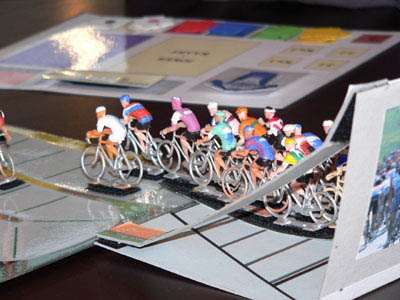
This is a game created by the students of a school in Avelgem (Belgium). They are participating on a national contest and the last thing I know is that they are are selected for the semifinal. They are also looking for a sponsor or partner to produce the game (anyone?). You can check their blog (http://www.bloggen.be/the7thcyclinggame/, Dutch only) to follow tthe game's progress.
Thanks to Elsy Vanmeenen for the information and for
sending English rules.
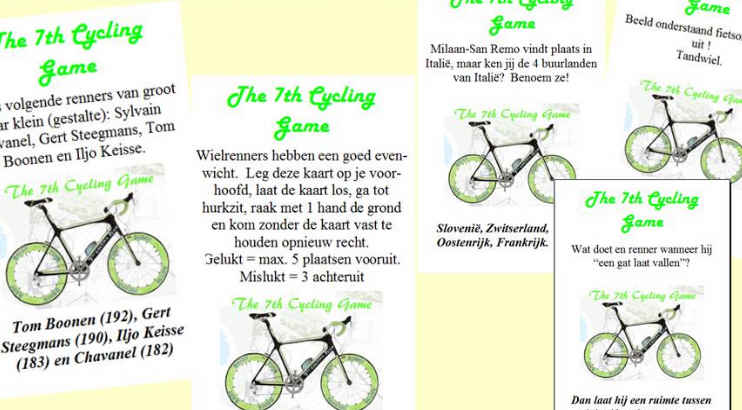
(Pictures captured from the game's
blog)
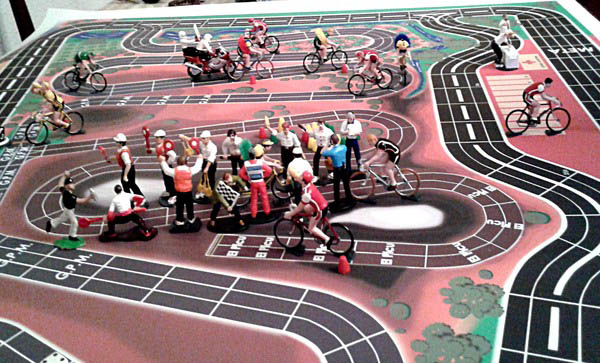
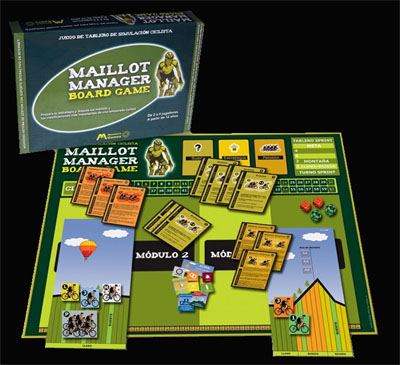
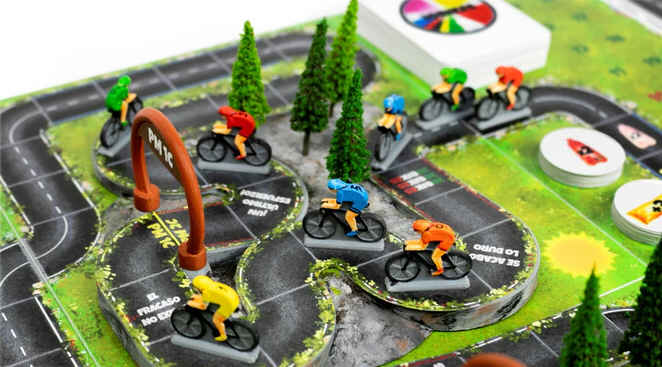
3D BIKES, by Ribergraf
3D Bikes is a project by Spanish graphic designers
Ribergraf
Games. The game was intended to be "the best cycling board game ever" (where
have I heard that before?) This said, it is supposed to be a family game for all
ages, for 2 to 8 players, which recreates a stage race. In search for realism
the game has been designed in 3D, as it name implies. Unfortunately the
Kickstarter campaign has been canceled and I am not sure if the game will
finally see the light. In the meantime, you can check the game's
website
for more information, more pictures, and even the game rules.
Thanks Hans Plattner for the tip.
A RUEDA, by Josep-Manuel Torres
"A RUEDA" (which translates as "on the wheel" or "in the draft") is an ambitious energy management game by Josep Manuel Torres from Barcelona. The rules are very detailed, almost 40 pages long and I would say I detect an influence from the Avalon Hill family of games. Almost every contingence that you can find in a cycling race is covered except doping. There are three levels of play (junior, senior and master), three or four players per team (depending on the level of play) to be chosen between eight categories of riders (from team leader to time trial specialist, including the usual climber, sprinter, rouleur, etc...), which may have four different qualities (aggressive, explosive, descender, recovery). Needless to say, all types of stages and terrains are covered. There are dice in this game, but they are only used to determine the outcome of race incidents (punctures, falls...) and weather conditions. The movement of the riders is determined by how much energy they are willing (or able) to spend in every turn. All this is managed by tables and one of the players acts as game director and is supposed to be too busy to take part in the race. According to Josep-Manuel, the game plays quite fast, and a stage should not take much longer than an hour. One can argue that just reading the rules takes longer than that, but of course players are not supposed to read the complete rules every time they play the game. The secret to the short playing time is the fact that only riders who are not in the peloton behave independently, while the riders in the peloton only do so if they attack or if they are dropped.As I write this (december 2014) the game is still in beginning of the testing phase and Josep-Manuel is open to suggestions. If you feel like contacting him, drop me a line and I will put you in touch with him.
BAROUDEUR
Baroudeur is an abandonned project form my friend Yann (from Paris). Baroudeur, actually, was an unfinished but playable set of rules to be played in almost any board. (even in a game-of-goose's board). However, Yann changed his mind and devoted his energies to his fantastic PBEM Tour de France game (http://fr.groups.yahoo.com/group/jeutdf/).I am not really sure if Yann wants his rules posted here, so I keep them to myself for the moment :-(
BIKBIK: by Jaime Munárriz and Esther Berdión
An unfinished game by the creators of La Serpiente Multicolor. Very good ideas in here (including the use of relative movement), but quite unlikely to be developped in the next few years :-(
BREAKING AWAY CUSTOM MADE BOARDS
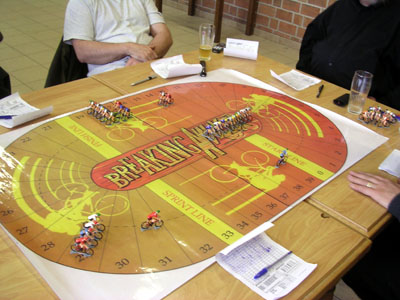
Breaking Away is a cult game for which lots of variants have been devised. Similarly, some people have made their own boards.
Non-velodrome-shaped board by Dale Addy (picture taken from BoardGameGeek)
Huge board to play with 1:43 riders. This one belonged to the late Geert Lagrou.
BUTTONCAP CYCLING by Alberto Quintairos (2019)
Alberto Quintairos is one of the most prolific authors in this "unpublished games" section. This is his third cycling game, or atr least the third that I am aware of (the other two are Giro Histórico and Veldiv Femenino). Of course, Alberto makes his games for his own enjoyment and does not try to publish them, but his prototypes are beautiful and I guess he spends quite a lot of time making them.
This new game is quite unusual (and different from his previous games) since there is a dexterity element but not the one you might expect at first glance. While there are button caps that are spun in the usual way, this is not a button cap race but rather an aiming game. Caps must stay on a narrow road (in this case, he uses the straight tracks from Arrivée) and of course the farther they go, the better. But then, the number you see at the side of the road marks the delay of that cyclist in the stage (which is zero if the cap makes it to the finish line). Each cyclist has two independent throws, the delays of which are added. Then, and this is what is unusual, there are some extra rules which are governed by a D10 die, and some bonifications according to the riders abilities (there are climbers, rouleurs, sprinters and time trialists)
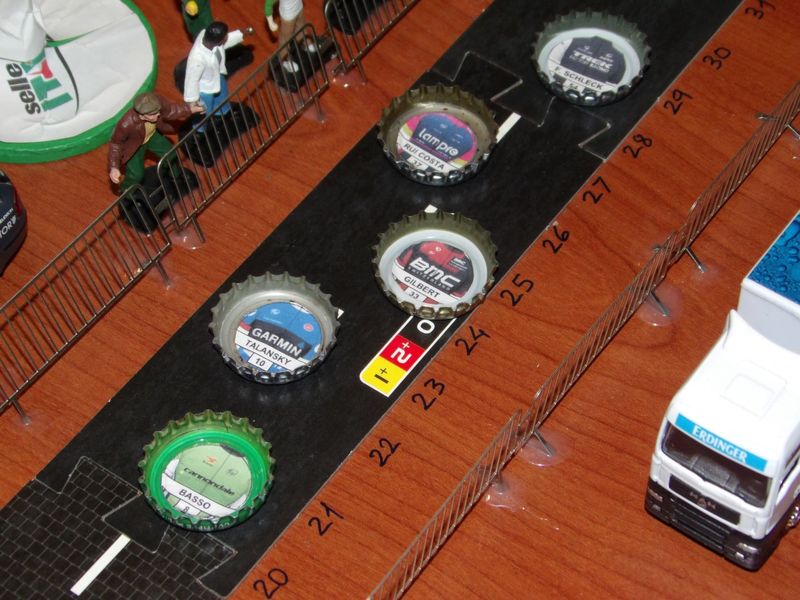
There are also nine different trucks with sponsor names, which play a part in the game, an auxiliary car and three vans (one for the Tour, one for the Giro, and one for the Vuelta). As you can see, Alberto's games are labours of love. However, if you are interested in discussing the games with him, or simply want to get in contact with him, drop me a line and I will put you in contact with him.
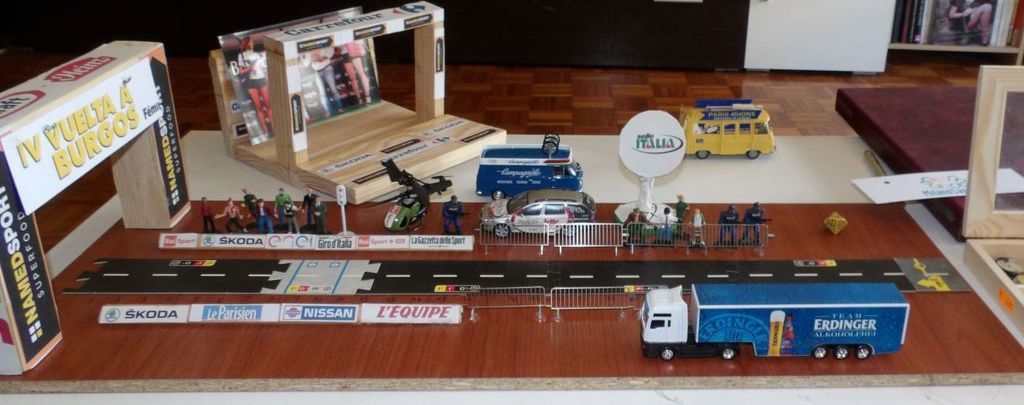
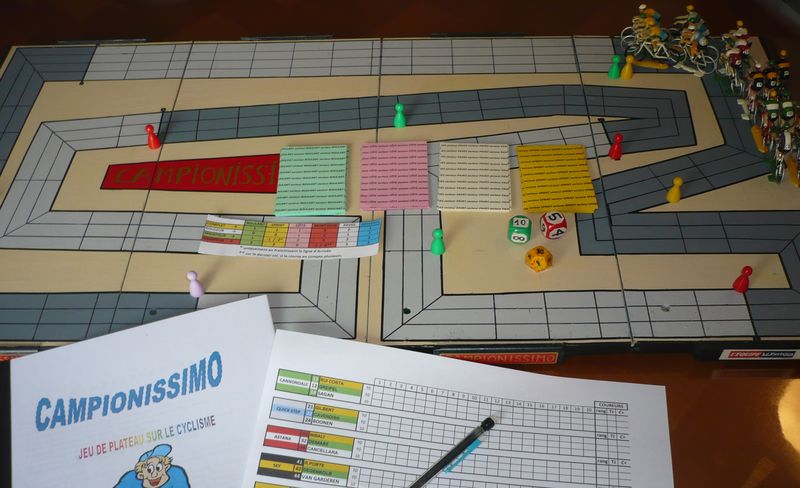
CAMPIONISSIMO by Dominique Paget
This is a game made by Dominique Paget from France. It is a dice game, complete with rules for almost every cycling topic (climbs, aspiration, energy management, time-keeping for stage races...) Most of the rules are what you might expect from this kind of game, including chance cards and different dice for different types of road ("oh no, another roll-and-move dice game!" I hear some say), but the energy management rule is original and gives the game a strategic touch.
Dominique is looking for a partner to develop this game (preferably in the Paris area). If you are interested contact me and I will put you in touch with him.
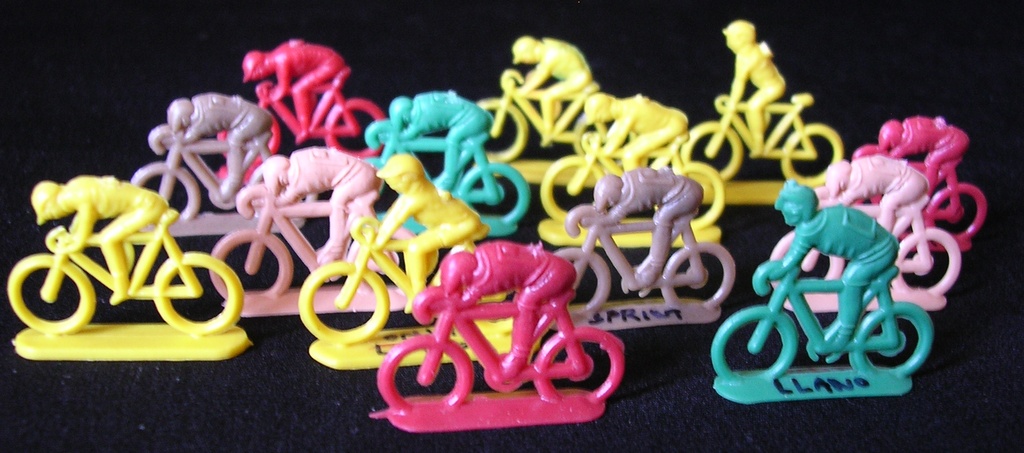
Children tend to modify or create games. (Well, at least some do). I wish I could find some of my childhood designs, but I am afraid most of them are lost forever.
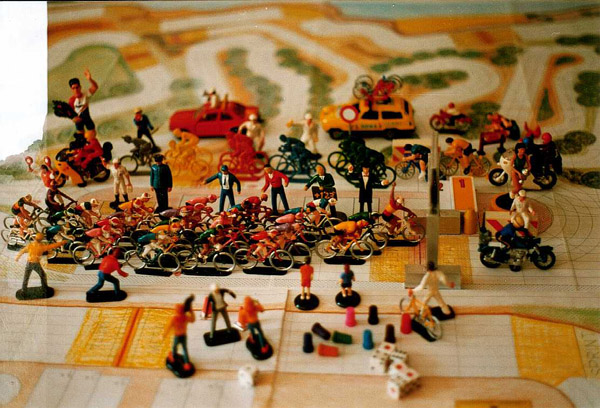
If you look closely at these Montaplex cyclists, you will see words written on some of them. I can read "llano" (flat) and "sprint" on the picture, but I still have the cyclists at home and there is also a "Mont" (Montaña=uphill) and some riders marked "*" and "+". This is my own handwriting (I must have been 12 years old when I marked them) but I can't remember how the game went.
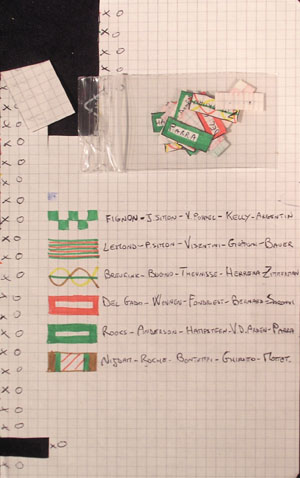
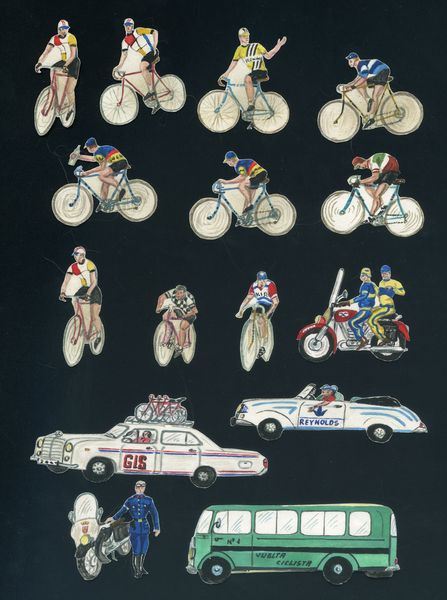
This one was in the box of a game I purchased (Mattel's Il Giro d'Italia). If you recognise it (if you made it or know who did), drop me a line ;-)
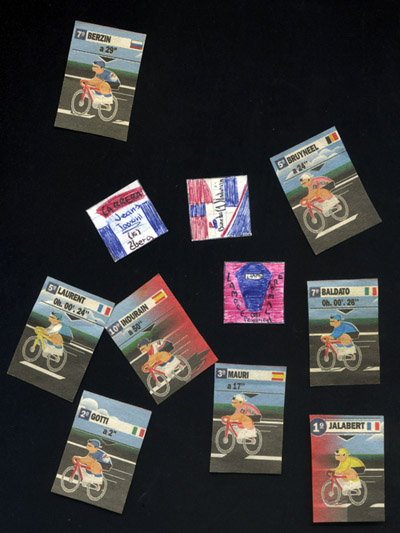
These bits and pieces were found inside a copy of Sprint. Of course, most them are cut from the press, but Induráin , Fondriest and Zberg are handmade. Again, if you recognise them, contact me.
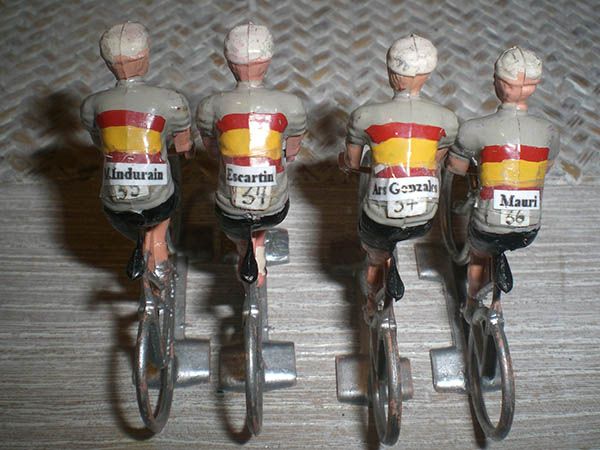
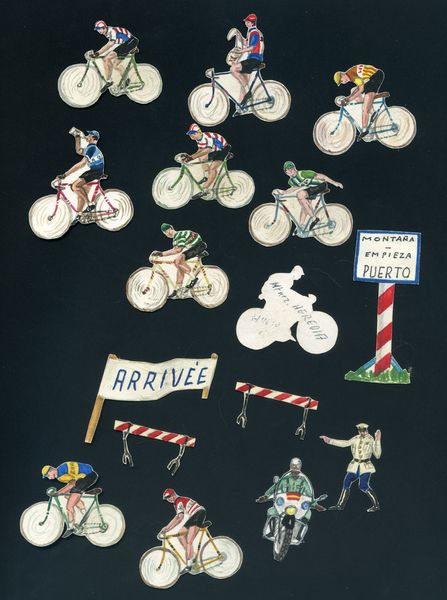
These cut-up riders, and many more (over one hundred) were purchased in Zaragoza, Spain. Each cyclist has a name written on the back and they make a peloton of ca. 1980. Someone did A LOT of work with this set.
I received these pictures from Fernando Campo, from Valladolid, along with the rules index. All I can say is that the game is quite complete and, of course, beautiful. I wish I knew a little more about it.
Update 2018: Fernando keeps working on his game. He has sent new pictures and I hope we can have interesting news quite soon (or, at least, as soon as possible).
CICLO POLY by Rossella Ottaviani and Paola Chiarolini
This is a board game designed by Paola Chiarolini upon an idea from Rossella Ottaviani for the Ciclofficine Popolari in Rome. The Ciclofficine, by the way, are bike co-ops where you can repair your own bike and, of course, are ideologically at the other end of the spectrum of what the Monopoly game means.
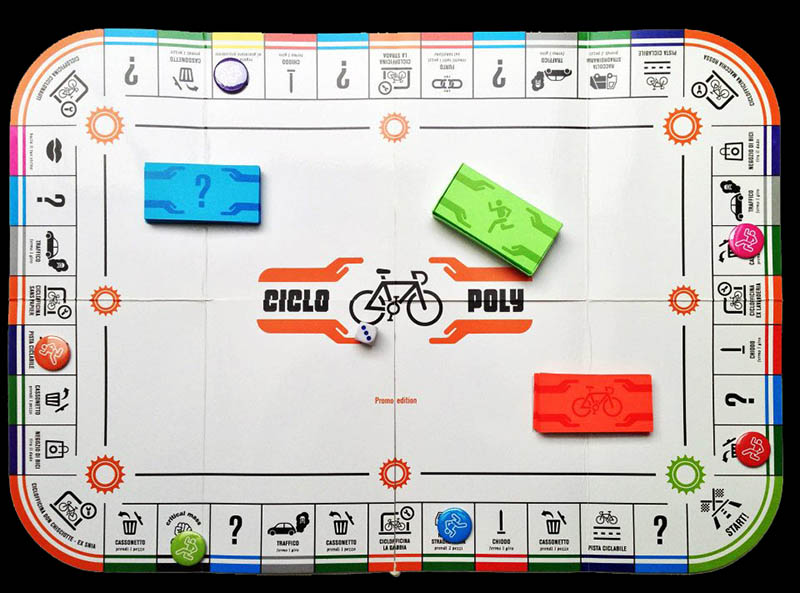
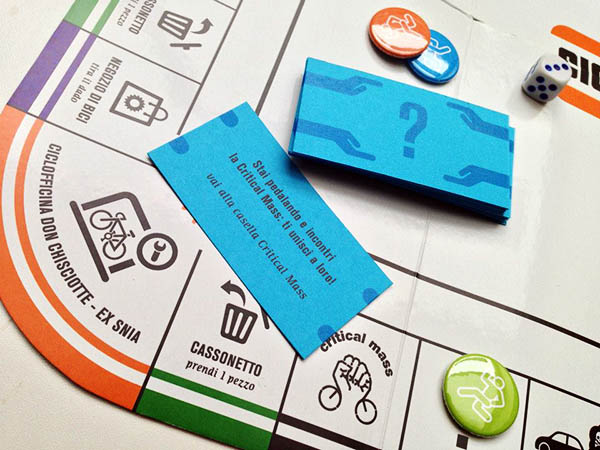
I found the mention to this game (and the pictures) in the podcast of the Spanish free webradio Hacia el Sur en el Atlántico. I wish I could find the game too.
COMMENT JOUER AVEC SES CYCLISTES MINIATURES
In Jean Philippe Mahieu's excellent Cyclistes-Miniatures blog there is a section where collectors discuss the rules they use play with their figurines (or the rules they used to play with when there were kids). At the moment of writing (December 2020) there are two sets of rules, one by Jean Philippe himself and one by Moreno.
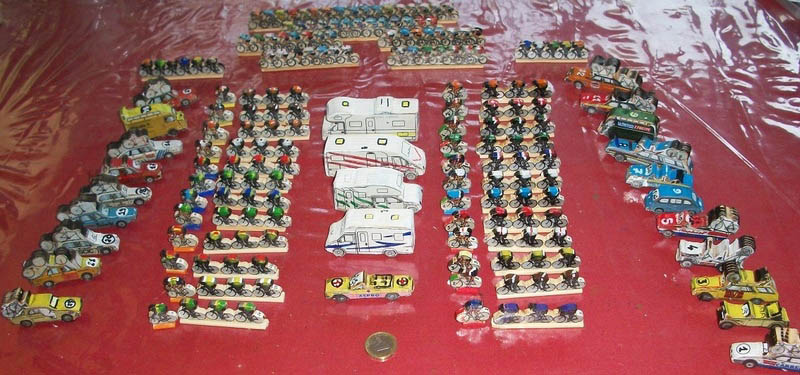
COMPENDIUM DI CICLISMO (Dr. Daniele Banfi)
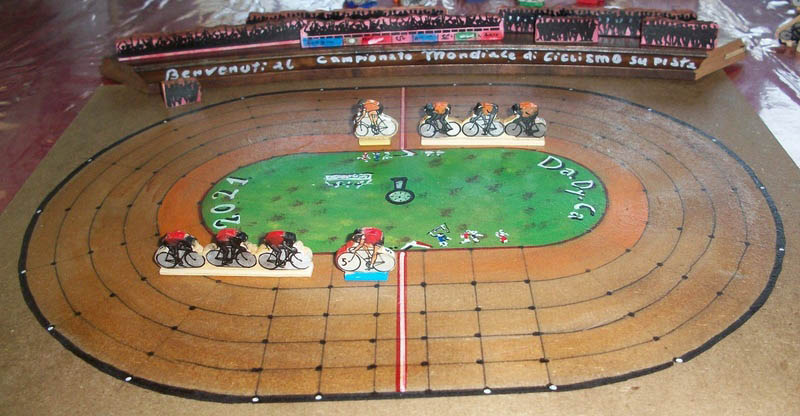
Daniele Banfi has been making cycling games forever. Among others, he has built most of the Corriere Dei Piccoli games in wood, or has gathered the rules of different cycling games in a collection called Compendium di Ciclismo, also made in wood. Here are a few pictures of his extraordinary work.
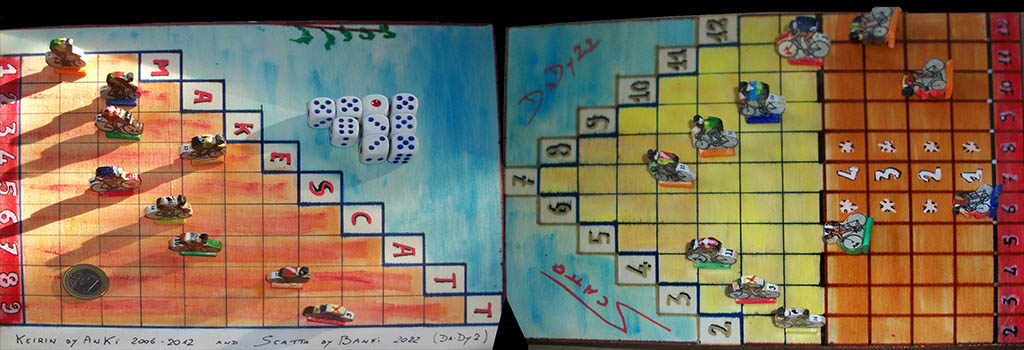
UPDATE 2022: Daniele Banfi keeps making cycling games. His creativity knows no limits. Here are a couple of examples (formally similar, maybe, but different in rules). One of them is inspired by yours truly's Keirin game, as you can see.
These are independent games, and maybe they deserve their own attention (there are some interesting ideas in there) but on the other hand I think they all fit under "Compendium di ciclismo", don't they? Thanks for sending them Daniele!
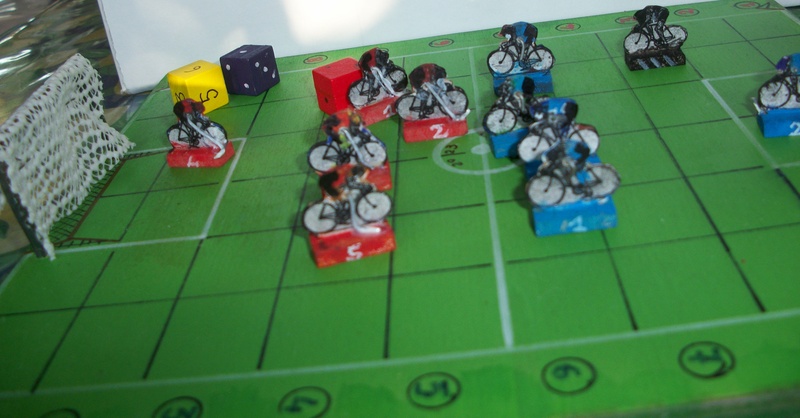
UPDATE 2023: Is this a cycling game? Does it belong to this site? Of course Cycle Polo is a sport that uses bicycles (as is Cycle Ball), but I am not really sure this CICLO POLO game invented by Dr. Banfi really belongs to this website. However, I will be pleased to read your opinions about it.
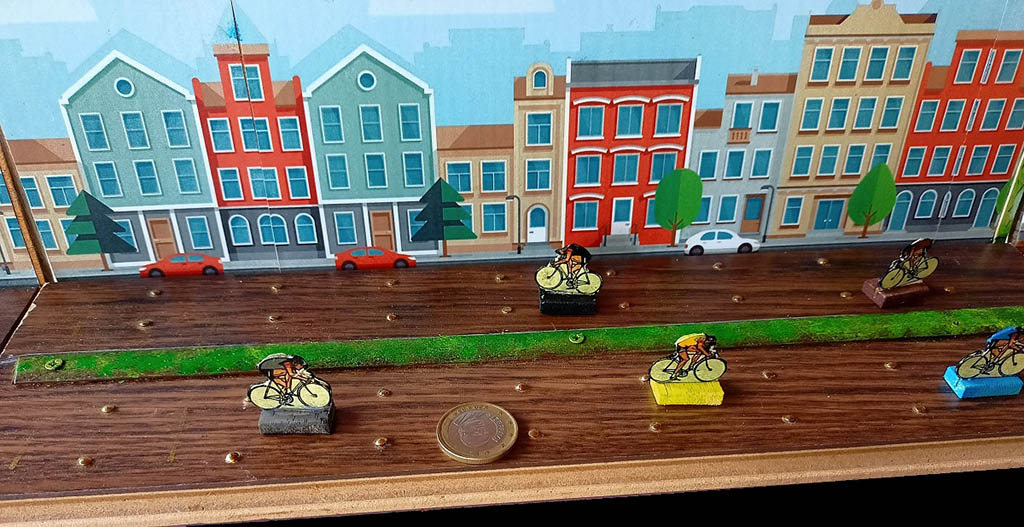
UPDATE 2023 (OCTOBER): Daniele's work never stops. He keeps making wooden models. Now he is into a series of 3D boards (for different sizes of riders, as you can see). They look gorgeous!
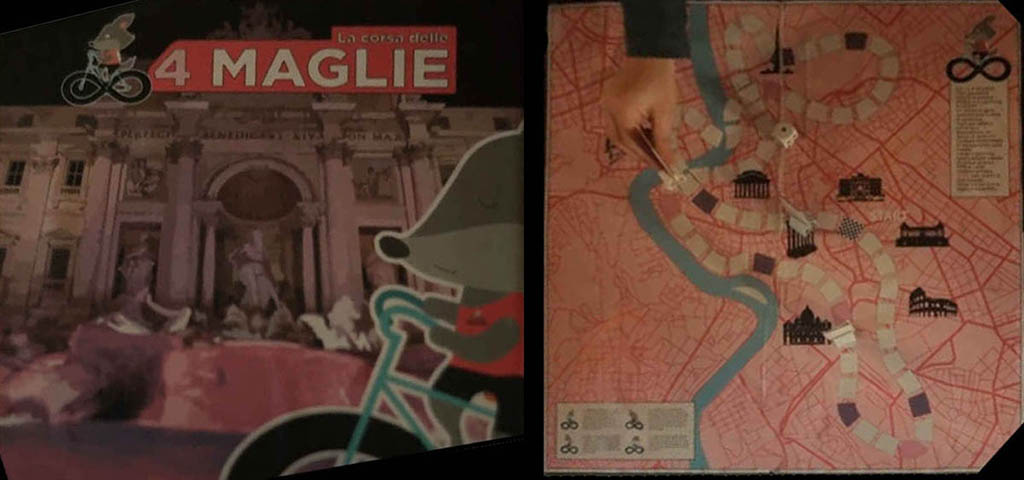
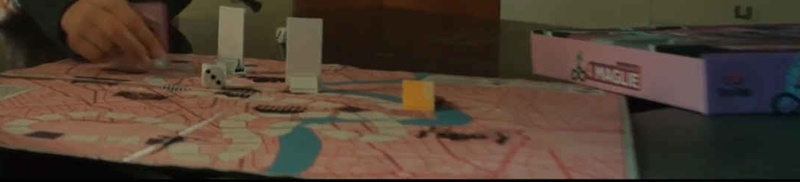
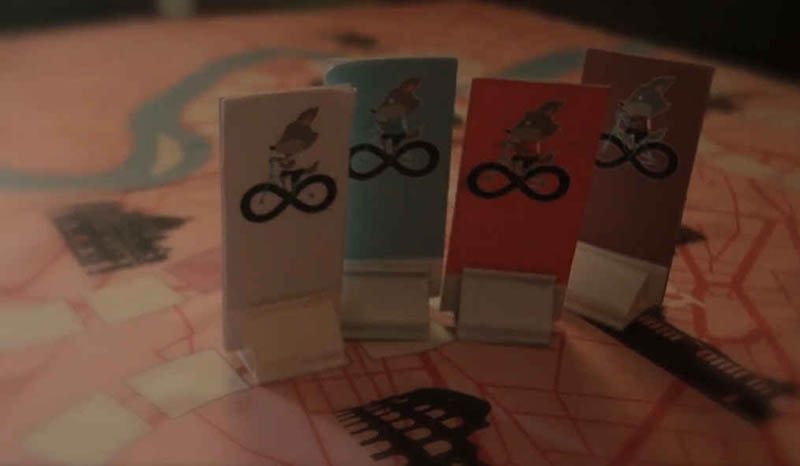
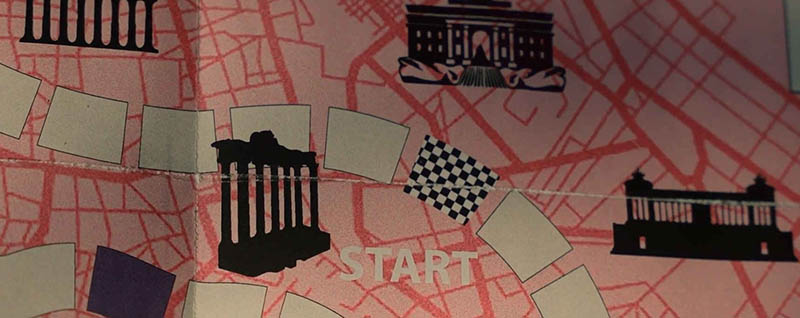
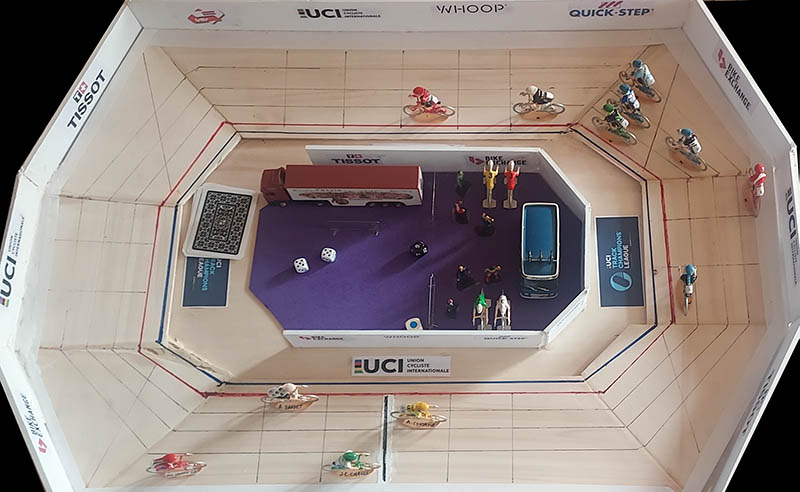
This nice (well...) board game, complete with its box, represents a race in Rome and is seen on the promotional video for the 2023 Giro d'Italia, whose final stage happens to be in Rome (which is far from usual). Quite a lot of details about the game can be seen in the video, including the board, the four "maglie" figurines, one die, young children playing... We cannot read the rules, but we can see they are quite short. With this in mind, we can assume that it is a simple roll-and-move dice game for four players.
The only trouble is that the game does not exist. Of course, at least one copy must have existed, the one used for the video. It would be nice to think that at least a short promotional edition has been made, but I do not have any evidence of that, and although I would love to be proven wrong, my guess is that this game has never been available in any form.
Box front (left) and board in the best screenshots (and highest resolution) I have been able to capture from the video
Board and box, lateral view
The four riders
There are a few board of the board in the video. It looks like an old board game, doesn't it?
You can see the video here.
Thanks to Siegfried for the tip!
COUP DE BORDURE, by Jérôme Kaplan
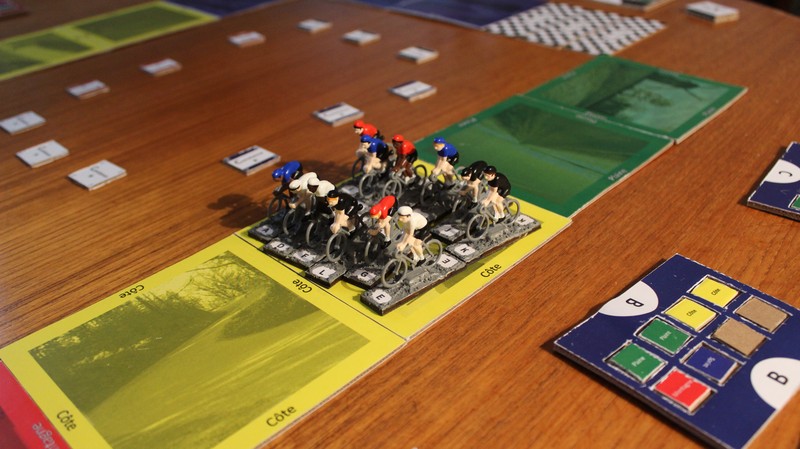
This is an interesting new game of which I am proud to be allowed to put the rules online for your pleasure and comments. (As usual, send me your comments and I will forward them to Jérôme). The game, as it is, is almost ready to be played (of course you will have to provide a few things, among them the riders, and cut some cardboard tiles) However, there might be a proper P'nP version some day, who knows. For the moment, the rules are not final since the game keeps evolving (update: the game works fine with 5 players though the rules only mention four), but the game is fully enjoyable.
Click here to download the (French) rules (PDF, 1.3 Mb)
In case you do not read French and want to know more about it, I can tell you it is a strategic energy-management game with a bluffing component. It does not have randomizers (dice or cards), and should be played in around 45 minutes. For the moment we do not have a time-keeping rule for anm hypothetical GC, so we can only play one stage, though, as you see in the picture below, it is configurable.
Jêrome uses metal riders by the Fonderie Roger (but you can use whichever you have available)
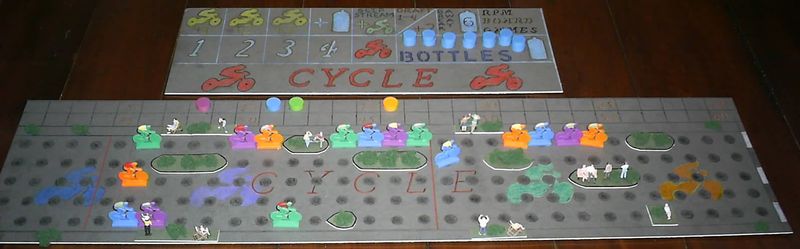
"Cycle is an easy to learn yet innovative strategic racing game that uses an action based type of system. No dice, cards, or record keeping are needed and scores are kept on the score track as the race progresses. Each player controls a team of four cyclist which one is a leader in each team. The leader has one bonus action that can be performed during the race which may be played out of turn. The leader also gets bonus points if he finishes the race first among his own teammates, more challenging than it sounds. The team with the highest score wins. The heaviest hitters in gaming should find this game enjoyable and challenging along with everybody else that enjoys a good race game. Warning: The slowest rider's are penalized with negative points at the finish so don't forget about those drifting back."
This game was scheduled for 2011but unfortunately it is delayed indefinitely :-( Check BoardGameGeek for details.
CYCLING CARD GAME 2015
This is a collectible-type card game which appeared on Ulule in 2015. You had the possibility of buying less cards (starting with a pack of 10 cards at 5€) but the complete collection of 270 cards costed 85 €. Too expensive, of course. And since the cards look like pictures (illegally) taken from magazines with a clumsy typography superimposed, it is normal that nobody was interested.
CYCLING LEGENDS, by Giovannini-Giusti-Baldazzi
Francesco Giovannini sent these pics. Unfortunately, he has not sent the rules yet, but the game looks fantastic!!!
CYCLO PRESTIGE, a cyclo cross game by Jan Moerman from Gent
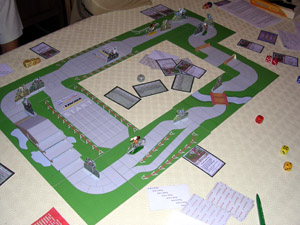
I played this one in the fall of 2004 at Geert Lagrou's place. Though the game was in quite an embrionary state, and I had to struggle with the Dutch-only tactical cards' text, I can remember that I won the race!
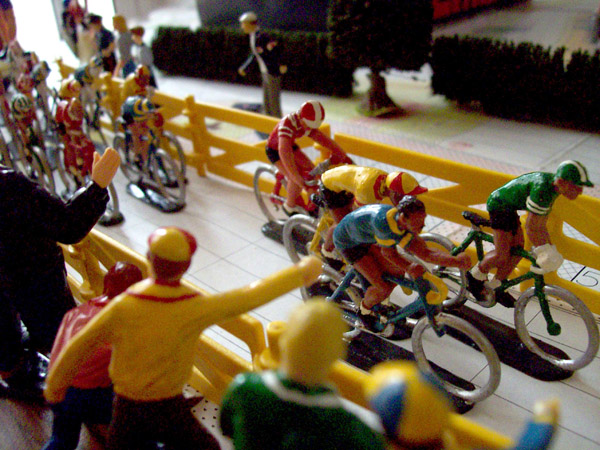
As you can see, the prototype had cardboard riders (well, if you see one made of plastic... it was a substitute since we were more players than cyclists), fences, even a ramp!
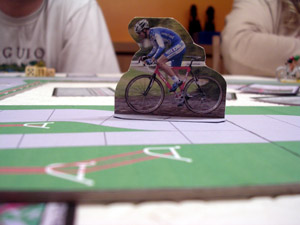
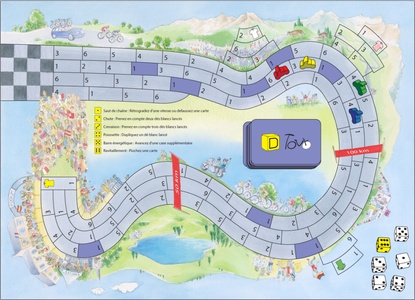
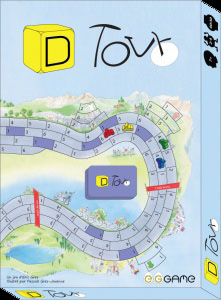
D TOUR, by Eric Gras & Pascale Gres-Jouenne
I stumbled on this game while browsing the web. It looks like there might have been a small edition of the game at some point, but I really don't know. The author has his own website in which he includes a list of shops that apparently sell his games (or at least some of them). If you leave near one of the selling points, maybe you could inquire (and of course, let me know if you discover more about it).
DIE HARD CYCLING, by Johan Vanhuyse
This is a nice work in progress by my friend Johan Vanhuyse. It is a dice management game which, although not finished, is already playable and fully enjoyable. There is even a Vassal module with which you can play this game. If you feel like playtesting the game, contact me and I will put you in touch with Johan.
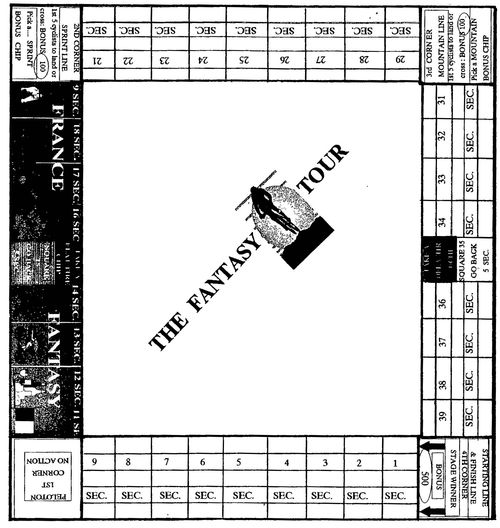
FANTASY TOUR (David González, USA, 2002)
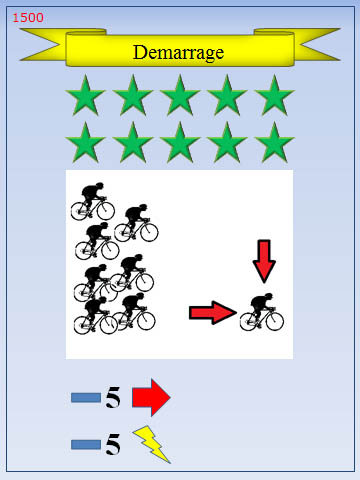
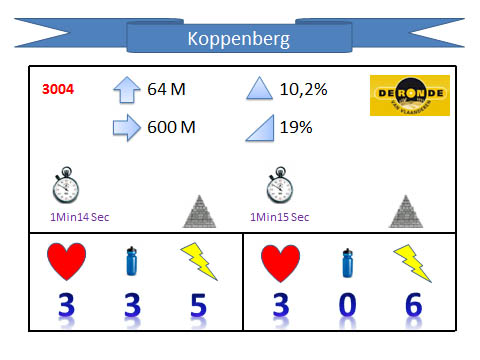
This is a game you can find on Google patent browser. It is a stage race game played by 2 to 8 people with one die. The abstract states: "A board game used for playing a bicycle or tour race with an improved game board. The game board includes indicia thereon which defines a plurality of parallel tracks which extend along an interior periphery of the game board, the tracks extending around the entire game board. At least a section of the parallel tracks pass through indicia on the game board defining a geographic area which includes indicia defining sites and places of interest within the geographic area defined. Overlay strips, defining other geographic areas with sites and places of interest within the other geographic area are provided, for changing the geographic area on the game board. The board includes a set of receiving and retaining slots for receiving and retaining overlay strips for changing the geographic area through which the tracks of the race pass".
A new Homas Tour variation. Ludo Nauws believes this one is different enough from the original to deserve its own name, and who am I not to agree?
Check everything about this game on Ludo's website. It is in Dutch, but online translators are better each day ;-).
(Picture by Ludo Nauws)
French journalist and writer Éric Fottorino mentions a game he used to play in his childhood in at least three texts:
(a) Chaque jour au milieu de l’après midi, je revenais me poster devant la télé [..] Mes heros. Jamais fatigués, toujours prêts, en attendant la transmission, à courir une étape “pour de faux” avec mes petits coureurs de métal que j’alignais dans le couloir carrelé, propulsés par le jeu du hasard et à coups de double-six. (“Mes Tours de magie” in C’est mon Tour, collectif, Eden, 2003, p.36)
(b) Enfant, j'eus tôt fait de changer cette passion mythologique en courses de coureurs métalliques sur le petit damier du carrelage que s'étalait de l'entrée à la salle à manger, carreaux noirs et blancs, jeu de dames reservé alors aux messieurs. Par la grâce d'un joyeux anachronisme et d'une lecture assidue de Miroir du Cyclisme (avec ses pages "Que sont íls devenus?" ou "La roue tourne") mes champions à torse et mollets d'acier se mesuraient par-delà les générations, assujettis à de haletants roulements de dés. (Petit éloge de la la bicyclette, Folio2€, 2007, p. 15)
(c) L'été sur le carrelage frais de la cuisine, à l'heure de la sieste, sans le tic-tac de la pendule, je faisais avancer mes petits coureurs de métal et leur rève d'Arlequin, maillots orange des Bic, damier des Peugeot, caramel et noir des Molteni, violine des Mercier, un arc-en-ciel, un maillot vert du meilleur sprinter, d'autres encore, les bleu azur italiens, quelques belges en rouge et noir. J'ai encore dans l'oreille le son mat de mon peloton miniature, quand le socle en fer des coureurs volait d'une case à l'autre. Il y avait longtemps que, sur ces carreaus divinatoires, j'avais attribué le "maillot" à Bernard [Thévenet]. Mais, cette fois, ce n'était plus un coup de dés qui avait décidé de son habit de lumière. (Je pars demain, Folio, 2001, reissued 2011, p. 83-84)
GIRO HISTÓRICO, by Alberto Quintairos
This is a replay game (if I have understood it well) created by Alberto Quintairos using the Corriere Dei Piccoli riders that I have been uploading. It's always nice to know your work is appreciated :-)
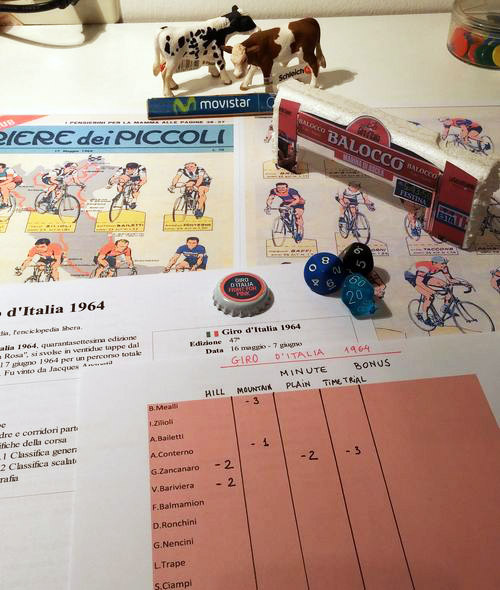
JONES' TOUR (2019)
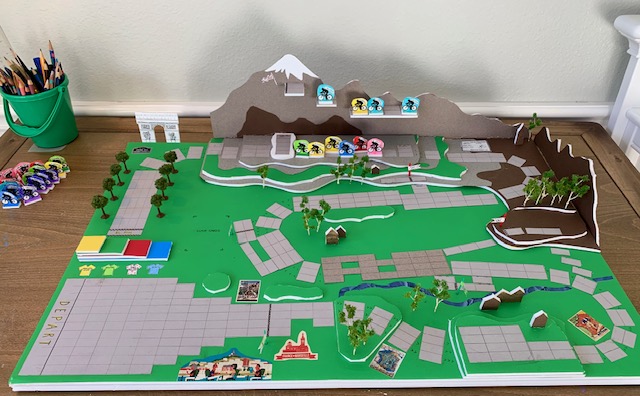
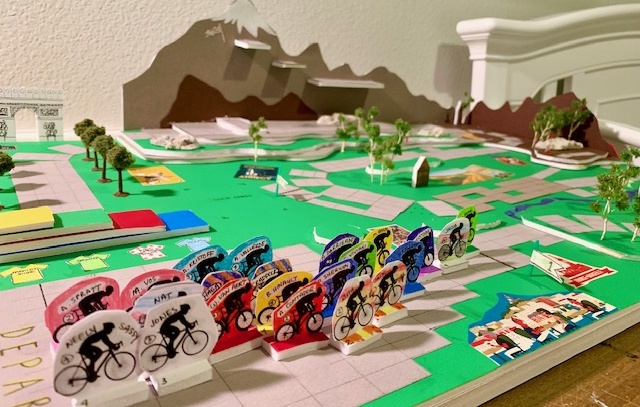
Andy, from Texas, has sent me a few pictures of a game he is working on, and a brief description according to which the game is "complete with cobblestones, the Pyrenees, the Alps, Champs-Élysées and more. Drafting other players makes like real Tour. There is sprint and king of the mountain, team and maillot jaune of course. 4 ways to win." Even though I cannot say much more about this one, the 3D board looks really nice.
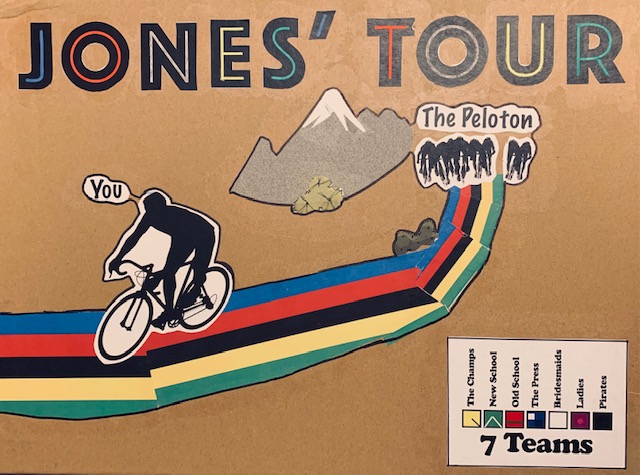
Andy tells me that he might actually talk to some game developers about publishing. Needless to say, if you are interested drop me a line and I will put you in touch with him.UPDATE 2021: The game has been renamed by Andy's son to "Jones' Tour". (It used to be "Andy's Tour de France Game") . Needless to say, it is a much better name. It also features seven teams now and has a nice box.
I found this one while browsing the game (here: http://jvgec.skyrock.com/) I don't know much about it, not even if it is a board game exactly, but I liked the self-made riders. By the way, JVGEC stands for "jeu de vélo et gestion d'une équipe cycliste".
DE KOP VAN DE KOERS (HEAD OF THE RACE)
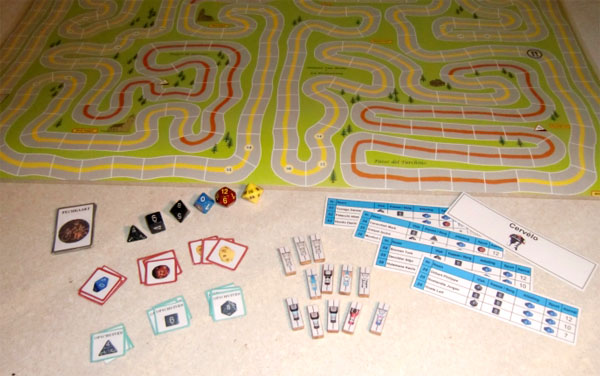
This is a game made in Belgium by a cycling fan who just wants to play with his friends. Therefore there is only one copy and unfortunately it is too complex for the author to make more copies, or to turn it into a print'n'play game. So far there are 15 A1-sized boards, more than 40 different teams with 3 riders each, up to 500 game cards, special dice... However, even if the game is not a print and play game yet, you can try to make your own version. The first thing you will need is the 21 page booklet, which you can download by clicking here.
Of course the game inventor will be glad to discuss the rules with you or to know your opinion about it. If you want to contact him, please contact me and I will put you in touch with him.
That's is how the original game looks like
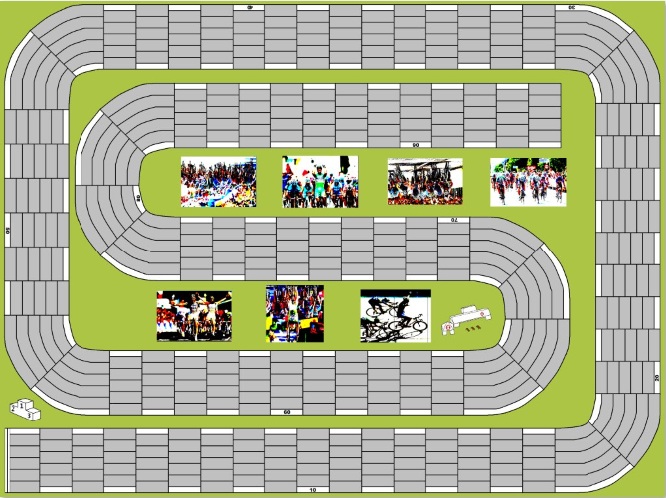
Here are two boards for special versions of the game: mass sprint...
...and track cycling. The rules for these games are not yet translated into English :-(
In search of more realism, Daniel Kazaniecki has added so many variants to Leader 1 that he feels he has almost a new game. He has called it "Leader 2". The rules can be downloaded from Boardgamegeek.
Just have a look at the appendixes to see how far things have gotten: :
Appendix 1: additional concepts
Appendix 2: cobbled races
Appendix 3: individual time trials
Appendix 4: team time trials
Appendix 5: stage races "fame counter"
Appendix 6. other classifications in stage races
Appendix 7. simulating real races
Appendix 8: peloton AD 2009Up to you to judge if it is a different game, but the variants are interesting in any case.
Spanish game in which you manage a cycling team during a complete season. As far as I know, it is still in the testing phase.Check its progress here.
MERCKX & GIMONDI by Donato Pompei
A very nice project by my good friend Donato. You can click here to see the current state of the project.
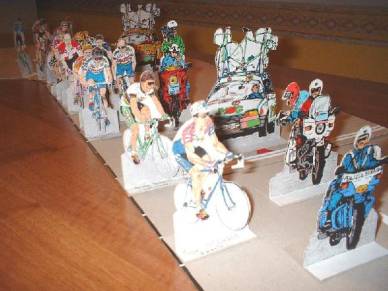
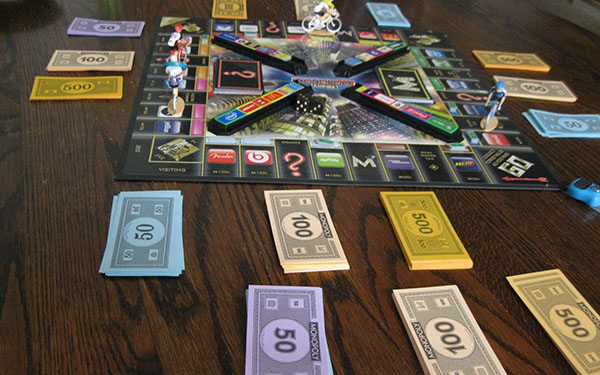
I saw this game for sale on eBay (april 2014). Looks-like an unlicensed customized Monopoly game with way too big L'Échappée Infernale riders. Furthermore, it is quite expensive. So I am not buying it. I already have a monopoly-like cycling game, anyway.
French writer and filmmaker Gérard Mordillat describes a game he used to play in his childhood in “La nappe à carreaux”, a text included in the book C’est mon Tour (collectif, Eden, 2003, p.69-80). Though you cannot really reconstruct the game, the description, scattered through several pages, is quite complete.
[..] une toile cirée à carreaux multicolores de 6 x 6 cm[..] une collection de cyclistes miniatures qui [..] permettait d’aligner les cent trente-deux coureurs du peloton sans qu’aucun ne manque à l’appel. Il y en avait de deux sortes: des centaures en laiton où l’homme et le vélo ne faisaient qu’un et des plus modernes dont le corps en plastique s’ôtait de l’engin…
[..] Pour que la course soit vraiment belle, quelques accéssoires étaient nécessaires:
1) deux dés;
2) un grand Larousse familial pour figurer les cols hors catégorie;
3) les “Robinsons suisses” pour ceux de première catégorie;
4) une céramique de Valauris retournée pour ceux de deuxième catégorie;
5) une brosse à chaussures pour ceux de troisième catégorie;
6) une glace posée à plat pour faire, àu choix, la mer ou un lac;
7) une Tour Eiffel de dix centimètres de haut désignant l’arrivée à Paris.
[..] La compétition se deroulait en trois étapes: une de plat, une en montagne, une contre la montre pour l’emballage final. Après la première étape, les trente-deux derniers concurrents étaient déclarés hors délais et éliminés; après la deuxième, trente autres disparaissaient. La victoire se disputait donc entre les soixante-douze rescapés ce qui [..] était éxactement le nombre de coureurs à l’arrivée du Tour 61.
[..] La règle du jeu était simple et compliquée, à l’image du cyclisme lui-même
[..] À tour de rôle, [nous] lancions les dés pour faire avancer un concurrent qui avançait sur les carreaux de la toile cirée du nombre de cases décidées par le sort. Nous avions évidemment le choix de faire avancer l’un ou l’autre de nos coureurs, à la manière des directeurs sportifs que gèrent leur équipe au mieux des interêts de leurs marques ou de leurs drapeaux.
Celui qui tirait un chiffre double rejouait immédiatement. Le double-six donnait le droit de rejouer deux coups de suite afin de favoriser les échappées.
Au contraire, le double-un forçait le concurrent à mettre pied à terre pour crevaison. Dans ce cas-là, pour repartir, il devait à nouveau sortir un double. Si par malheur c’était un double-un, c’était la chute et l’abandon.
[..] Un “leader” qui crevait pouvait évidemment reclamer le vélo de l’un de ses équipiers
[..] Le sprint se disputait sur les dix dernières cases, avec un seul dé.
In his june 26th, 1965, chronicle for L'Equipe, Antoine Blondin mentions a game created by French novelist Roger Nimier. As you can read in Blondin's phenomenal complete Tour de France chronicles compilation Tours de France. Chroniques de L'Équipe 1954-1982 (Paris : La Table Ronde, 2001, p 379):
L'hiver, il s'ingéniait à mettre au point in "jeu du Tour" d'une complication extrême, auquel il conviait ses collaborateurs et quelques académiciens, voire des auteurs classiques. Je me rappelle une pathétique ascension de l'Izoard où Pascal avait "mis un quart d'heure dans la vue" à Descartes.
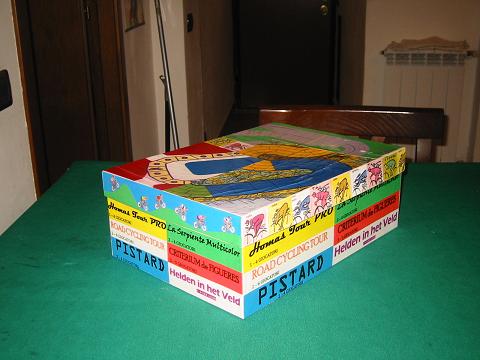
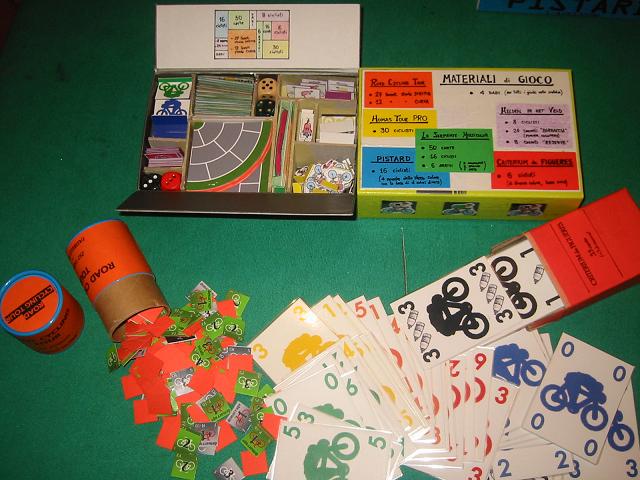
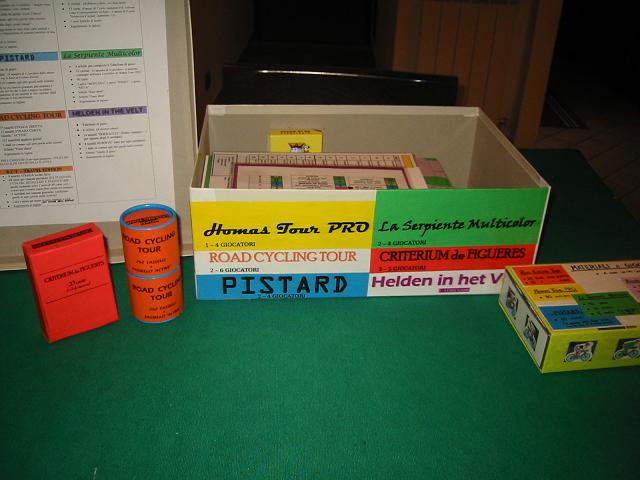
Roberto Pietrangeli had an unfortunate bike crash which has kept him at home for a while. To kill time he has made this fantastic "Free Cycling Games Compilation Box". The games included are La Serpiente Multicolor, Criteriun de Figueres, Homas Tour Pro, Pistard, Road Cycling Tour and Helden In Het Veld. Amazing!
GÉRARD PORTE'S GAME
In the same Tango issue in which we found Le Jeu du Tour de France, there is a description of games played by the Tour de France doctor Gérard Porte.
Les jeux d'enfant de Gérard Porte sont la plupart du temps dirigés vers le cyclisme: courses avec des etites figurines cyclistes ou avec des cartons sur lesquels les photos des champions de l'époque, découpées dans les journaux, sont collées. Toute l'organisation -ou presque- des grandes épreuves y est: voitures suiveuses, commentateurs, classements journaliers et général, publicité sur la ligne d'arrivée. Tous les types d'épreuves sont organisés: course en ligne, par étapes, contre la montre, en côtes, sur piste... L'amour du vélo mais aussi celui de l'organisation. (Gérard Porte. Une passion devenue réalité. Tango num 3, 1984, p.130)
DAS PROFIRADSPORTSPIEL (Germany, 2015- )
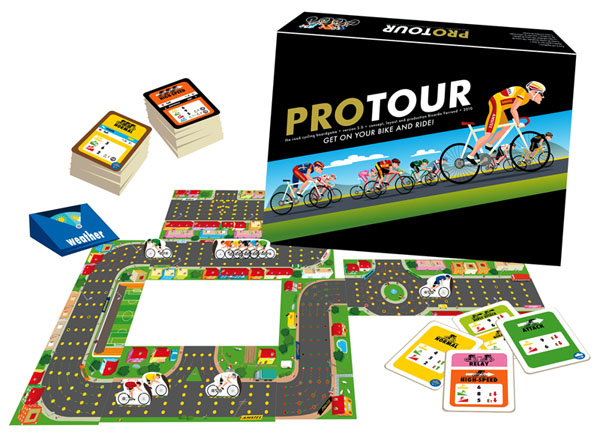
This is a HomasTour-based game currently being developed in Germany. I am told (thanks, Jens) that the game does not use dice, except for some random events during the race. Instead, the movement is determined by cards (as you may know by now, one of my favourite mechanics for cycling games ;-) There is a tumblr page where you can learn more about the game development and read the German rules.
UPDATE 2023: This game is in constant evolution. Now it has its own website, it has changed its name from ("Bike Race - Das Radsportspiel" to "Das Profiradsportspiel), the rules keep changing and adapting, and now they even include doping as a tactical option, So far, the rules, that can be found on the game's website, are German only, but, if you contact Jens, he clarify whatever you need in English.UPDATE 2024: Das Profiradsportspiel has always been more about the Tour or the Giro, but now thay want to pay hommage to the Vuelta too. Check this great video, based on the official 2023 Vuelta teaser.
Click on the picture to see this one
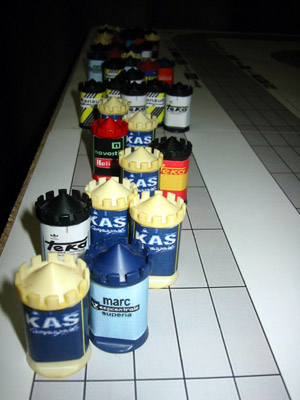
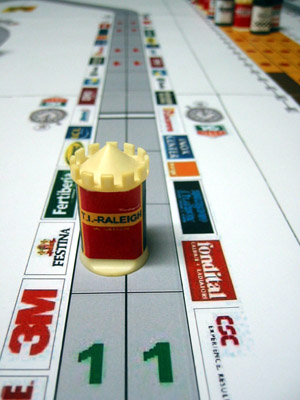
RADRENNEN / VELODROM by Heinz Fritsche (click HERE for more info on this one)
RETRO (Peter Frissen/Jack Habets)
This one is quite a weird one I found while browsing the web.
These are two dutch guys who had been playing this game since their school years. In summer 2007 they resumed playing. Peter Frissen, he is the designer, and Jack Habets, is the statistician. As Jack himself says: " The game we play is a spin-off from Homas Tour, we use the basic rules of it, but made our own, since we don't play against each other, but let the dice decide which rider is gonna win, we call it 'God-play'. We play all the great classics and a compact version of the Tours of Spain, Italy and France. Peter did draw all these tracks and I have made a ranking method to come to an overall ranking. Together we made the riders of 1978, since we are Dutch we would like to have some Dutch glory ;-) This winter we are riding the Tour de France of 1980, the Tour with the most Dutch win's ever"
There is a lot of work here!See all the pictures here: http://picasaweb.google.com/Felix.Levitan/
And the tracks here!!!: http://picasaweb.google.com/knightrohan4/RetroBanen#
RETRO ZESDAAGSE (Peter Frissen/Jack Habets)
What's even better is that these guys have made a fantastic 6-day race game with an incredible wooden track. Jack's words again: "Besides this road-racing we are enthusiastic Six-days viewer. We've also been playing this in our school years and after a visit to the Six days of Hasselt last februar we have made our own Six Days-game. We find this even more realistic and wonderfull than the road-racing game! One of the great parts is the track Peter made! "
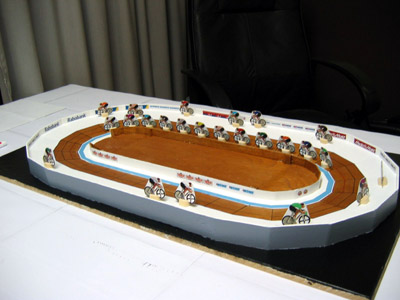
You can see the making of the track here: http://picasaweb.google.com/knightrohan4/Zesdaagse#
"THE RIDER" GAME
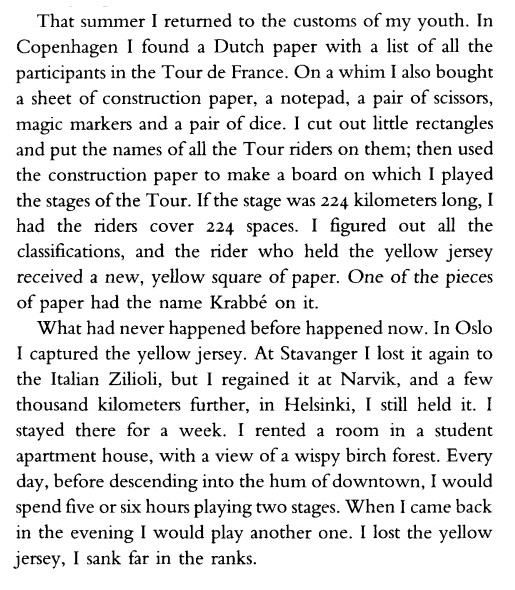
The following is extracted from Tim Krabbé's novel "The Rider" (Bloomsbury, London, 2002, p. 44-45). The original Dutch edition of the novel, "De Renner", is from 1978. By the way, I absolutely recommend this book. I am not going to say it is "one of the best novels I have read lately", not because it would be untrue, but because it would not add much, since I very seldom read fiction. It is probably "the only novel I have read lately" and might remain so for some months. I'd rather say "the best cycling book I have read in years", which is equally accurate and probably much more meaningful.
(By the way, in case you wonder about my possible illiteracy... I read mostly essays, mostly about music or related arts, and I even wrote a couple of books about music, but that was a long time ago.)
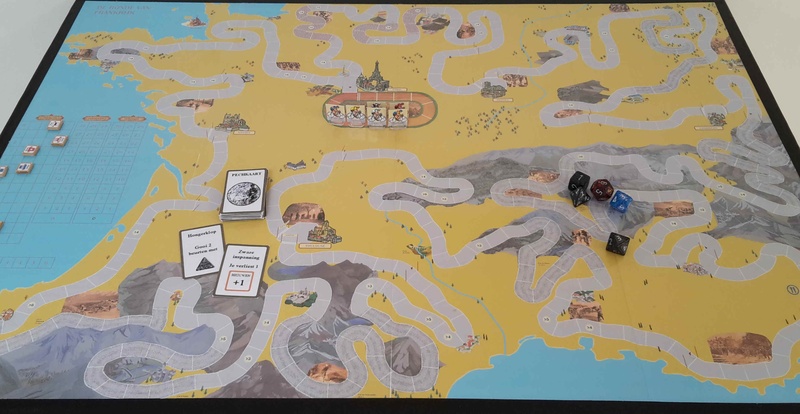
The maker of De Kop Van De Koers is currently working on a new game, De Ronde Van Frankrijk (which, as you have guessed, means "The Tour de France"). That's about all I know (or can disclose) about this game by now...
Posted 21/07/2005.
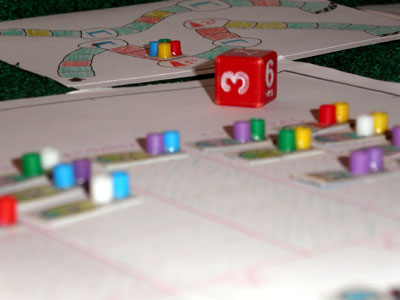
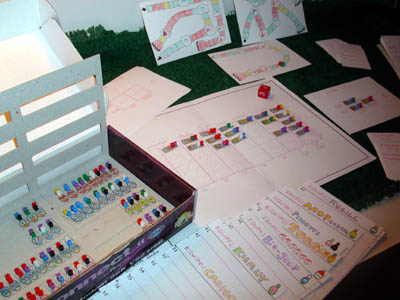
Another of my own games. This is just a set of rules for advancing a bunch of riders. They work quite well, which does not mean I ever try to make a complete game out of it. Here is what I have:
This is a game for any (reasonable) number of players. You can play alone, as long as you don't mind running time-trials all the time. You can play a single race, but these rules are ment to care about energy, and about the energy left after the day for the following day. This rules are meant to represent a multi-stage race. What I do not have are mountain or sprint rules, but probably they could/should be included.
Elements of the game:
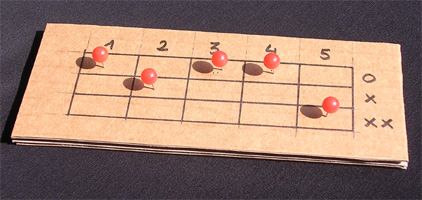
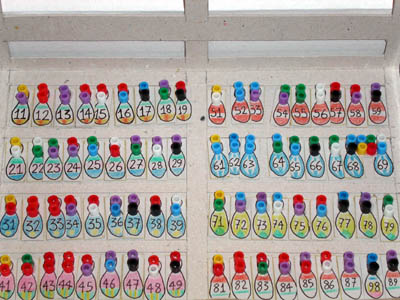
Teams of 5 cyclists, numbered 1 to 5. (Take it from any other game. You can even use the ones in PISTARD). Each team has one control board like the one on the rightmost picture. The color of the pins matches the color of the team, in case you wondered. (Of course they don't need to be pins. Anything will do).
Energy cards. A deck of cards numbered 1 to 5. In fact, the number of cards is not that important, as long as there are enough of them. I used around 200 cards. The proportions were:
- 35 per cent of the cards are number "1"
- 25 per cent of the cards are number "2"
- 16 per cent of the cards are number "3"
- 12 per cent of the cards are number "4"
- 12 per cent of the cards are number "5"But now I think the easiest way is to get four regular card decks and read them like that:
- A,K,Q,J mean "1"
- 10,9,8 mean "2"
- 7,6 mean "3"
- 5,4 mean "4"
- 3,2 mean "5"(I admit it's not the same proportion, but as I said the game was on the testing stage). Jokers can be ascribed to "1", or may be used as jokers, or may be used for such things as the mountain rule or the sprint rule (see end of text).
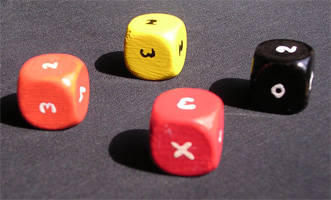
The dice. That's the important part of this game mechanics (along with the cards). We have four different dice (see leftmost picture), and I am afraid you will have to paint your own (at least that's what I did):
- 1 YELLOW die with the faces marked 2 2 2 2 3 3
- 1 ORANGE die with the faces marked 2 2 3 3 4 X
- 1 RED die with the faces marked 3 3 4 4 X X
- 1 BLACK die with the faces marked 0 0 1 1 2 2The road. Since I have not implemented rules for mountain, sprint, &c you can use the board of any other game as long as the cyclists fit in. You do not need lanes.
The game went like this:
You decide the length of the stage (around 60-70 squares worked, if I remember well). Every team receives the same number of cards (That I don't remember. Maybe I never reached a number. You can experiment by yourself. I would say 20).
One important rule of the game is that, in general, a rider is able to follow the pace of the peloton he is in. If the first rider of the peloton id fast enough, everyone may follow him without throwing their dices. (That part of the rules is not finished, there might be more exceptions. At the moment the only exception is the use of the black die).
All the riders start the game with the YELLOW die and therefore mark the square "O" on their pin board for all the riders. (The "X" square is for the ORANGE die and the "XX" square is for the the RED die; the BLACK die is not included on the pin board).
The first rider in the order of the race (ok, just put the riders in any order, this is just a test). Throws his die. At this point he can decide to keep the current die or change to another die). Let's examine the three coloured dice:
The YELLOW die (2-2-2-2-3-3) is quite slow, but safe. With it you advance an average of 2.33 squares. It may take long to reach the finish line, but you do not spend energy cards. If you want to run faster, you have to pay an energy card with the number of the rider and this rider will use the orange die. If you do, you change the position of the pin in the pinboard to "X", and you will use the orange die for that rider until this changes.
Of course, since there are more ones than fives in the deck, the rider 1 is generally your strongest rider. But you cannot really tell if how your rivals' riders "feel". Maybe they have a hand filled with fives and their rider 5 will give us all a surprise!
The ORANGE die (2-2-3-3-4-X) is a little faster than the yellow die, but has an X on it. The average advance is 2.8 squares but every time you throw an "X" you must decide between paying another energy card (with the number of the rider on it, of course) or shifting down to the yellow die (and keeping it until you change again). If you pay the energy card, you throw the orange die again to advance the rider. (Of course you could throw another "X" and still have to decide whether you pay ANOTHER energy card or shift down to the yellow die).
But of course you may want to run faster. Before you throw the orange dice, you can pay another energy ard and shift to the RED die. You change your pin on the pinboard and grab the fast but exhausting RED die (3-3-4-4-X-X), which has and average advance of 3.5 but two "X". Well, you can imagine how it works, you will advance 3 or 4 fields in every throw, as long as you are lucky not to get an "X". If you do you will have to spend an energy card to keep the red die or shift down to the orange die (which still has ans "X" on it).
If you still want to go faster, and you have the energy cards to do it, after throwing any coloured die you can pay one extra energy card and throw the BLACK (0-0-1-1-2-2) die ONCE. If you are lucky you will advance two fields, if you are not you might even stay where you are. The black die is not marked on the pinboard, so you do not keep it. A rider can't use it more than one time per turn (even if he threw a "0", aven if he has a lot of energy cards...). On the other hand, the black die can be used after any coloured dice, including yellow (although it does not make much sense, probably). It can even be used after following another rider (without throwing a coloured die).
Since the use of the black die is a sudden burst of energy, the follow-the-peloton rule does not apply to a rider using the black die (even if he throws a "0"!). A rider using the black die is supposed to try a breakaway.
-------------------------------------------------------------
Well, that's all I have (or can remember) about this one. The rest of the rules can be quite similar to those in many games. The game is meant for a multi-stage race (maybe 5 or 6 stages, including a time trial, either a team or an individual one). The second day the players receive new energy cards (maybe less than the first day) but keep the ones they have. So the big issue of the game is about when you should use your energy. The weakest riders of the team can still do a very useful work since they can lead a peloton and spend all their energy on a red die. As a result, a peloton can ride much faster than a single rider (much more energy to spend) as long as there is a good cooperation between the riders. (though the rules for shifting places inside a peloton aren't clear either, I know).
The development of this one stopped when I started thinking about TAKTIK TOUR. Then I discovered that TAKTIK TOUR would take too long and I shifted to ARC-EN-CIEL, and even did PISTARD. So ROULEUR has been in the limbo for a while, and might stay there quite a long time, though I think these mechanics are quite strong for a cycling game. Needless to say, I'll be glad to cooperate with anyone who wishes to use these ideas (or part of them).
---------------------------------------------------
Possible mountain or sprint rules: Let's assume cyclist "2" is a climber and cyclist "3" is a sprinter. The mountain rule would be something like "the joker cards can be used by the climber only in mountain sections, otherwise they will be used by the team leader" (of course, mountain sections should be marked on the road). Moreover, no aspiration rule in the mountain sections. Possible sprint rule: "near the finish line, a joker can be used by a sprinter to get an additional throw of the black die".
DIE RUNDFAHRT, by Peer Sylvester
Peer Sylvester, from Berlin, is a (quite famous, actually) game designer who is making his first attempt at cycle racing games. I promised him I would give him my opinion in depth, but I have been very busy. I still can't say much about this one (I am sorry...), except that it will be an interesting one.
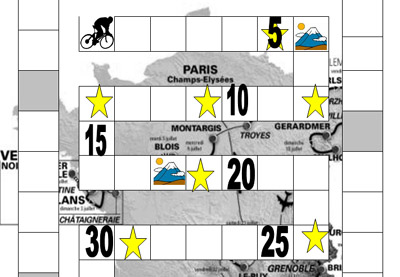
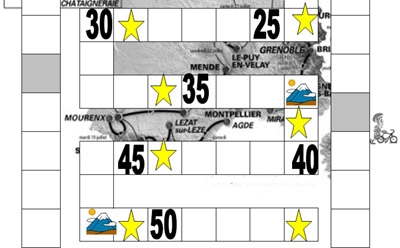
Spanish journalist Pablo Salazar mentions a game he used to play in his childhood in a 2019 text in Las Provincias:
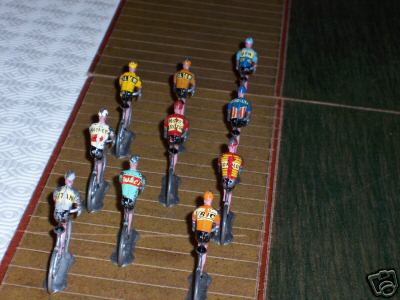
En un tablero que por un lado servía para jugar a los botones (otro día hablaremos de ese tema), por el otro dibujé una especie de velódromo, un circuito dividido en casillas. Y en él, cada verano, disputaba un Tour de Francia tan o más reñido que el auténtico. Los ciclistas de plástico -con un dorsal con su número adherido con celofán en el cuerpo- se movían según lo que saliera en los dados lanzados al efecto. Disponía de una treintena de corredores, que se repartían en cinco o seis equipos. Curiosamente, al final ganaba mi favorito, Joop Zoetemelk, [..] a pesar de que en mi carrera los ciclistas avanzaban gracias al azar de los dados, al final ganaba el que yo quería. Increíble.
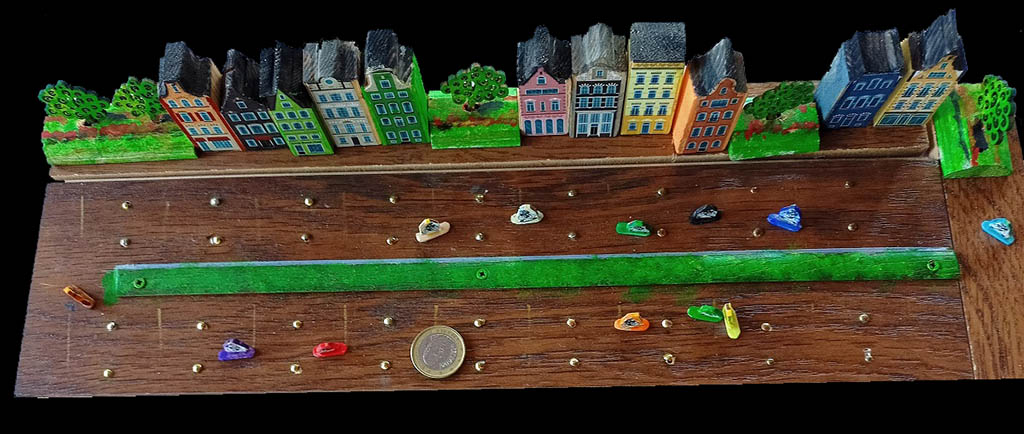
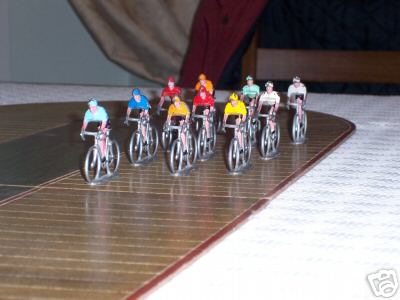
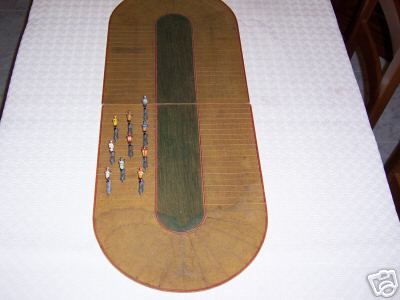
A) I purchased this one on eBay from an italian seller. It's a plywood board with some (french) Salza riders. It did not have any rules, of course, so I tried to make my own... I eventually wrote the rules for the game Keirin inspired by this board (more pictures of the process here). By the way, the pictures below are those taken by the the eBay seller. I should take some more of my own, I know....
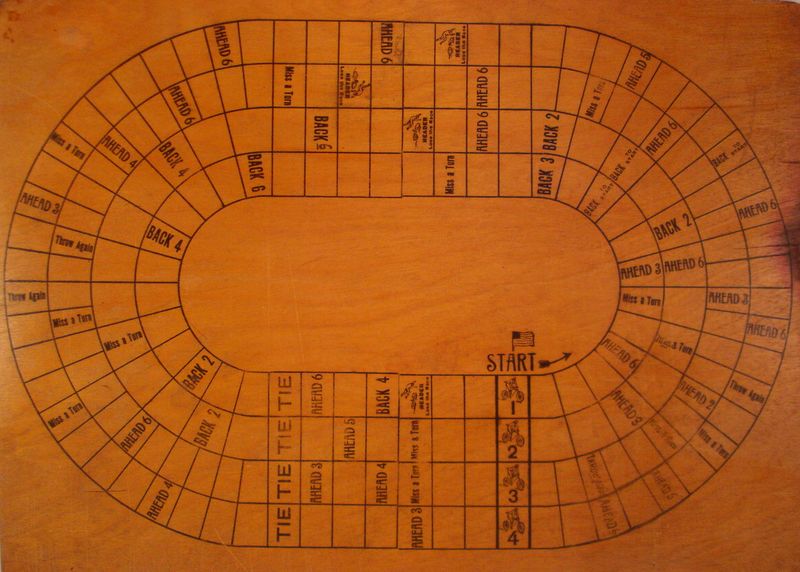
B) I purchased this one from an American seller and it features american flags, so it is surely American. It measures 35.5 x 25.5 cms and is printed or silkscreened (probably by hand) on a wooden panel. It was probably made in the 1930s, though it is difficult to say. (click HERE for more info on this one)
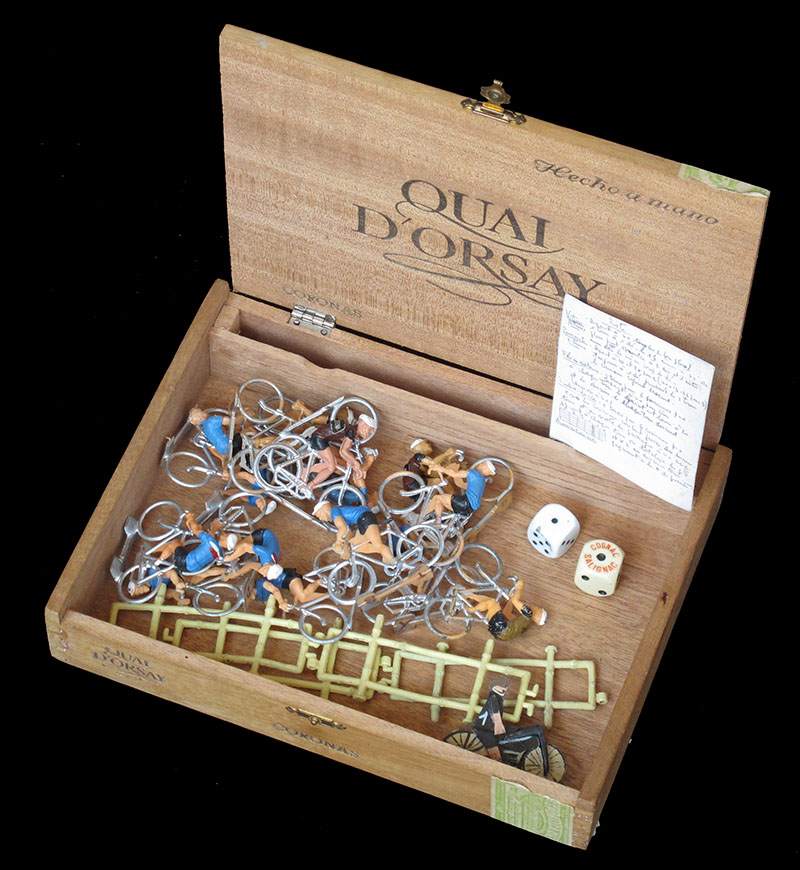
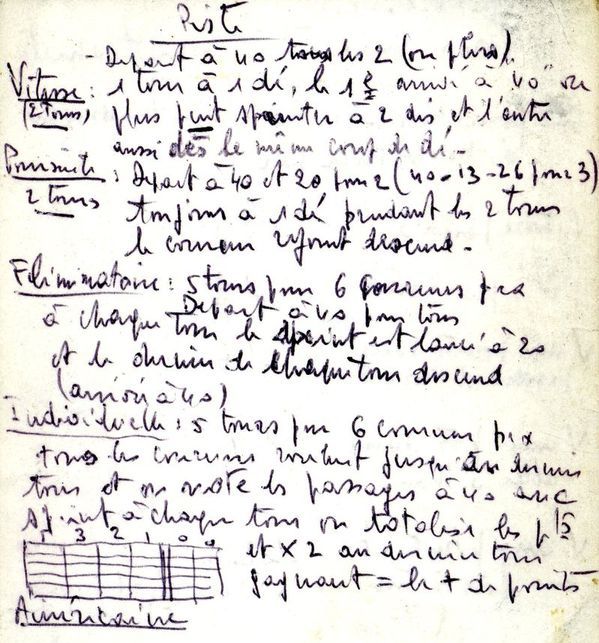
C) Here we have the opposite situation. I have purchased this cigar box containing the rules and the riders of a French self-made velodrome game, but unfortunately the track has been lost. All we know is that it was 40-squares long. There are rules for four different events: Vitesse, Poursuite, Éliminatoire and Individuelle. A fifth event is mentioned (Amériquaine) but the rules are not present.
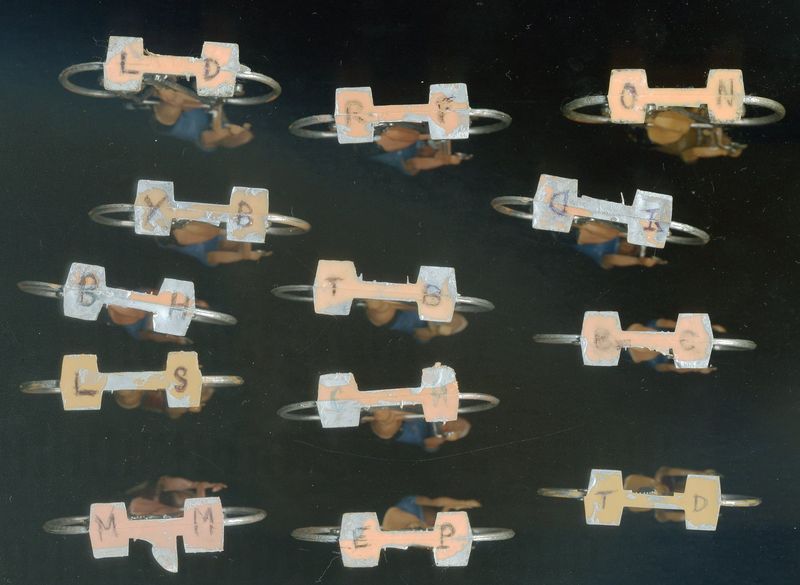
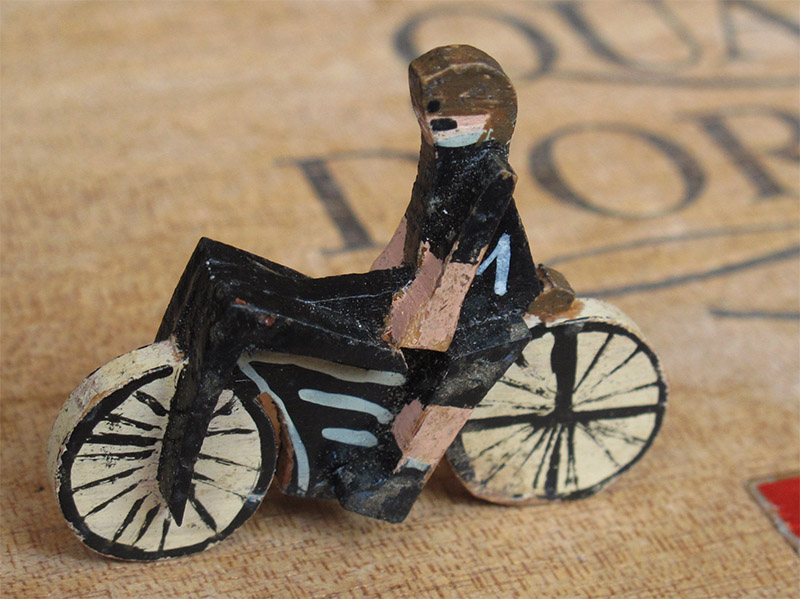
All the riders in the box are of the 1970s Cofalu type, except one, which is wooden and much older. I am not even sure if it is a cyclist or a derny, although no rules for a paced race are present in this box. It might also belong to an older game. It is interesting to remark that all the Cofalu riders have two hand-drawn letters under their base, different for every rider. However these letters are not mentioned in the rules.
On the opposite side of this tiny piece of paper there are (uncomplete) rules for a boxing game. Maybe (only maybe) the four plastic fences in the box mere used to set the boxing ring.
The mysterious letters
Has someone ever seen one like this before?
D
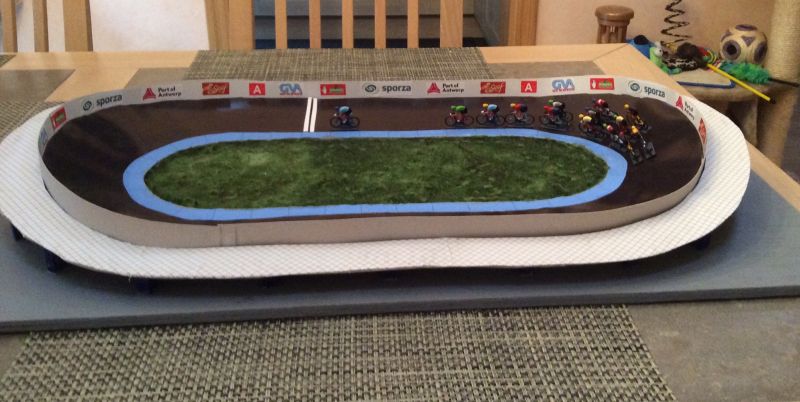
) Ludo Nauws made this fantastic 3D wooden welodrome. You can see more pictures and an explanation (in Dutch) of how he made it in his website.
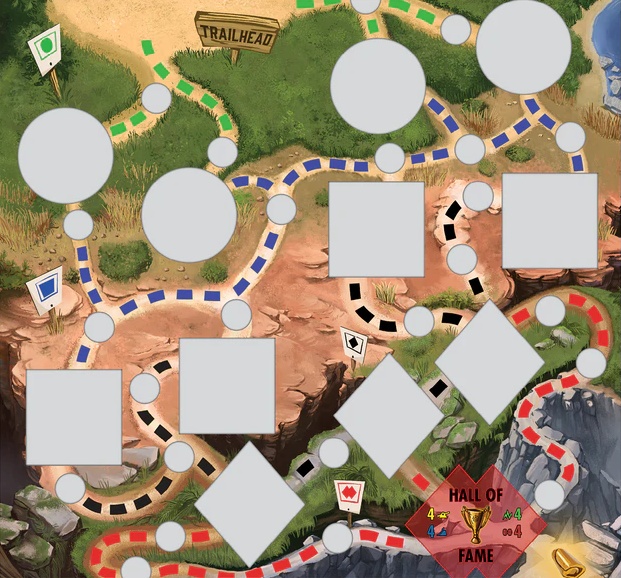
SEND IT! -The Mountain Biking Board Game (Syd and Macky, 2020)
A mountain biking board game complete with riding, crashing, skill building that has tarted as a Kickstarter project. You can see the game description and the complete rules, but if you are interested you will have to hurry. At the time of writing (may 2020) the project is already funded and there are only a few days left to get it. Myself, I am still trying to make my mind...
(Thanks, Hans, for the tip)
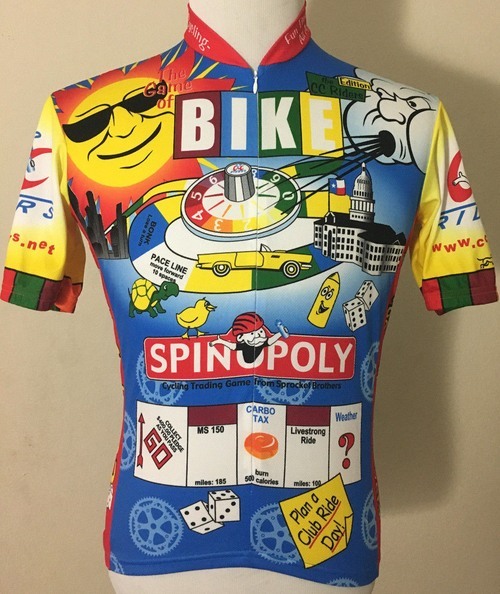
SPINOLY (Sprocket Brothers, USA)
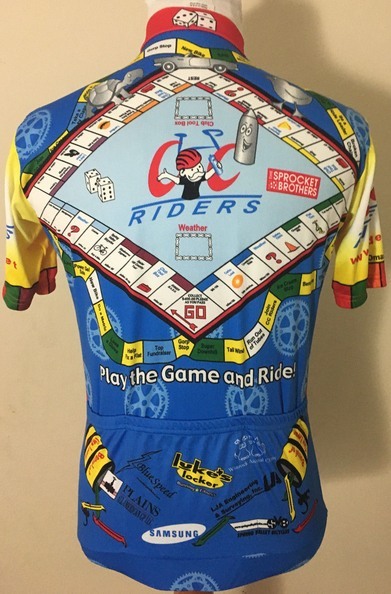
I saw this jersey offered for sale on eBay. I was tempted but I did not purchase it. I cannot tell if the game was actually released as a board game, who made it (the web domain ccriders.net that appears on the sleeves is no longer active) or when (though the "Livestrong Ride" square offers some clues). As long as I do not have any extra information I will leave it in the unpublushed games section.
SPRINT / L'AUTOBUS, by Tony Reeves
Click here for more info on this one: Smiffy's Rules BankSomeone called Tony Reeves wrote the rules for these two for a games fanzine. I find these rules quite interesting, but (a) "Sprint" does not really work (the second player always wins if he plays the correct strategy - a very easy one to find); and (b) "L'Autobus" looks better but this set of rules is not complete (for instance, how many cards are dealt to each player?).
I tried to contact Mr. Reeves but I could not make it. Can anyone help?
Sprint - a game of nip and tuckA game for 2 players 5 to 8 turns
This game has been in my head for some time now and I think it’s worth a playtesting. It is very loosely based on Sprint Cycling. When I was young this always struck me as a daft name because they don’t (sprint, that is) at least not until the final 200 metres or so. The bulk of the contest is taken up by an elaborate battle of wits in an attempt to hang behind the opposing cyclist until the last possible moment.
1.Each player has 6 cards, three 2’s, two 4’s and a 6.
2.One player starts on square 1, the other on square zero
3.Cards are revealed simultaneously and the players move the stated number of squares. Those cards are then lost with the exception described in Rule 4.
4. Any player who commences a turn exactly one square behind his opponent and plays exactly the same card as his opponent retains that card. The leading player can never retain a chosen card
5. The winner is the player who moves the furthest when all cards are discarded.I’m really not sure that the game will work but would be grateful to anybody who can playtest it or is willing to sign up and give it a go. I would run 2 games between opponents simultaneously, swapping the positions on the starting grid.
If it does work, I’d like to extend the idea to cover more cyclists. There would be a real Prisoner’s Dilemma element to the idea of mutual co-operation. We’ll see.
L’autobus - Sprint grows upL’autobus a multi-player game which has evolved from the 2 player game of Sprint. In practice, Sprint has been found wanting in terms of strategical and tactical options but I think that the basic "conservation of energy/movement cards" mechanism is interesting and is worth persevering with. Thus the element of taking back into the hand a card which is the same as that played by a cyclist on a space immediately in front (ie the next space ahead) is retained. The crucial difference comes from the increased number of cyclists and the effect of playing a card that would bring a cyclist into a group. The term L’autobus, I am lead to believe, is used for the group of cyclists who have no great aspirations in the mountain stages other than to stay within the qualifying times and therefore form a safe bunch in which they can all "travel".
The rules:
0. The object of the game is to travel as far as possible given limited resources.
1. There are 5 teams of cyclists per game.
2. Each player manages a team of 5 cyclists.
3. The cyclists start in 5 groups, each group separated by one space from the preceeding group. This means that the last cyclist in group E starts at space 1, the last cyclist in group D starts at space 7 and so on. The leading cyclist starts at space 31.
4. Players simultaneously reveal their card choices for each of their 5 cyclists.
5. If a cyclist is not in a space immediately behind another cyclist then the card is discaded and cannot be used again.
6. If the cyclist is immediately behind another cyclist and the card matches that played by the cyclist immediately ahead then the card is retained for future use. The trailing cyclist is assumed to have slipstreamed the leading one and saved his energy for later use.
7. In carrying out movement, the cyclists are moved in race position order. Note that two or more cyclists can never occupy the same space.
8. If a cyclist’s movement takes him to an empty space then he simply advances to that space.
9. If a cyclist’s movement takes him to a space where he would land on the same place as another cyclist then he moves to the next available forward space. It is therefore possible to overtake a continuous group of cyclists by playing a movement crd that would place a cyclist on the same space as a cyclist at the back of the group. This (sort of) simulates a rider moving up to join a group but being forced to move to the front of the group (taking the bulk of the wind resistance) for his audacity.
10. Their are 2 "Special" cards which can be played at any time except turn one. They can only be played ONCE and cannot be recouped into the hand as in rule 6 even if the conditions for doing so are otherwise satisfied. They are: (a) a ZERO card (b) a SPRINT card. The ZERO card results in no movement for the cyclist in question and may be useful in allowing another cyclist to pass by. It can only be used ONCE, even if the cyclist immediately in front plays a zero. The SPRINT card results in that cyclist playing ALL their remaining cards in one move to give an aggregate movement equal to the sum of the remaining cards. A cyclist may want to do this to break away from the remainder of a group, particularly towards the end of the race.
11. If a cyclist plays all his remaining cards before the SPRINT card then the SPRINT card turns into a movement card of value 1. This movement card behaves as a normal movement card as outlined in rules 4 to 9.
12. The race ends when all cyclists are void of cards.
13. At the end of the race, the 3 leading cyclists receive movement bonuses as follows, prior to the calculations of team scores:1st - moves forward 3 spaces
2nd - moves forward 2 spaces
3rd - moves forward 1 space14. The (penalty) scores for each cyclist are calculated as follows: One penalty point for every empty (i.e. unoccupied by cyclists) space between that cyclist and the winning cyclist. Thus, all cyclists in a group are judged to have the "same time" as there will be no additional empty spaces between the front and back of a continuous group. The bonuses in Rule 13 are intended to reward the 3 leading cyclists and to emphasise the difference between them.
Note that the winning cyclist will always have a penalty score of zero, the 2nd place cyclist a minimum of one, the third a minimum of two. It is possibly, but very unlikely for the remaining cyclists to all have a score of three.
15. The winning team is the team with the lowest aggregate of penalty points for its 5 cyclists.
16. Variant rules for mountainous terrain are in the alpha playtesting stage.
STAGES, by Douglas Boyce III (2018)
Stages is another game which after an unsuccessful Kickstarter campaign I am not sure if it will be (or even if it has been) released. It is (or was) a 2-4 player card game simulating a 21 Stage Grand Tour Bicycle Race, where players assemble teams and battle for stage Wins. Each stage has a different profile and players are team directors who choose between different types of riders ("Captain", "Sprinter", "Climber", "Domestique" and "Super-Domestique") for each stage. There are 130 different stages to make endless Tours.
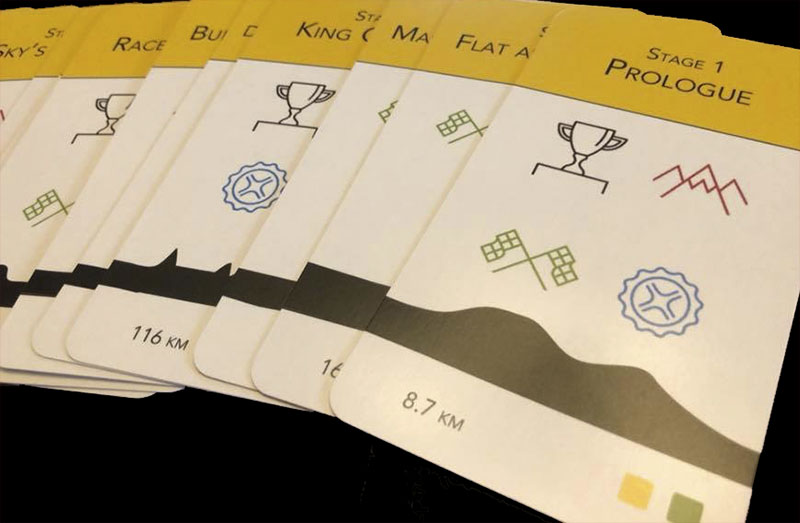
There was also supposed to be a print-and-play edition of this game (though not free). I newer pay for print-and-play, that is a house rule. In fact, I tend not to pay for files of any kind, if you see what I mean.) I do not like paying for electrons ;-) However, if the game is available somehow, I wish I can eventually get one and move the game to the general section.
TakTik Tour is closer to become a reality.
First draft of the rules completed (may 2010).
Beta tests starting soon.
This one is by Peter Davis from Exeter, Devon. Not exactly pro cycling.
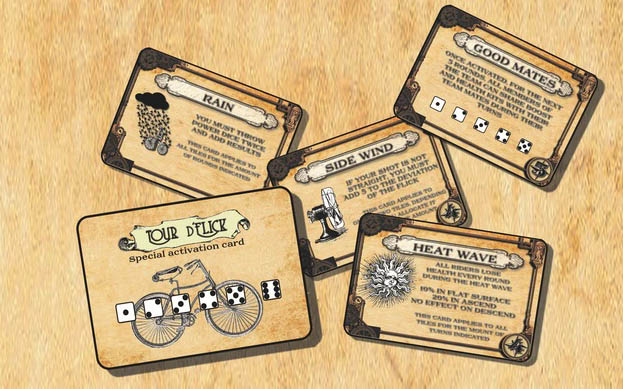
TOUR D'FLICK
This is a Kickstarter project whish was not difficult to fund. Tour d'Flick is a print-and-play board game to simulate a disc/crown cap flick race, in the fashion of a vintage steampunk cycling race. Looks nice, and it was not expensive (only 2 euros) but I have the strict policy of not paying for electrons if I can help it. So I did not pledge for a PDF file of the game (thanks anyway, Hans).
This said, Tour d´Flick is described as a flicking race simulator, where 2 team of 3 riders compete in a cycling style race on a modular board. I quote: "the riders are divided in 3 different specialities, Sprinter, Climber and Team Player. Each kind will have different abilities and respond differently to the terrain conditions". Sounds familiar, doesn't it? Anyway, if the game ever becomes a physical edition, I will surely be interested.
This one was for sale on eBay in 2020. A wooden board of 65 x 65 cms (big!) with Cofalu riders, simple rules, and poor pictures. For some reason I did not feel inclined to purchase it (and I am not sure anyone else did).
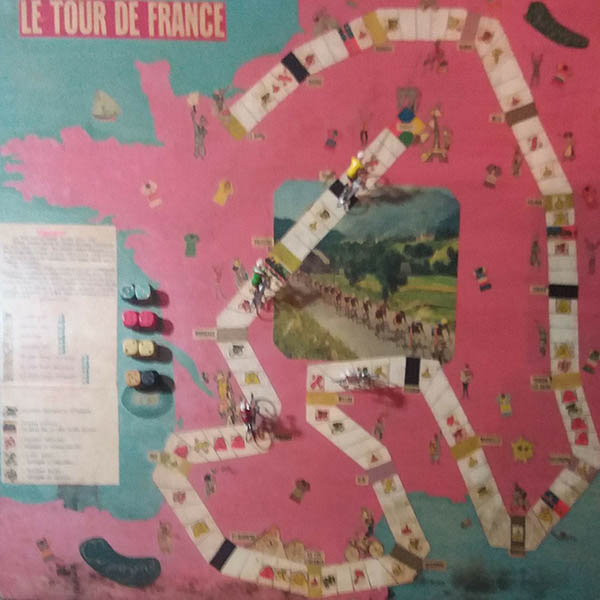
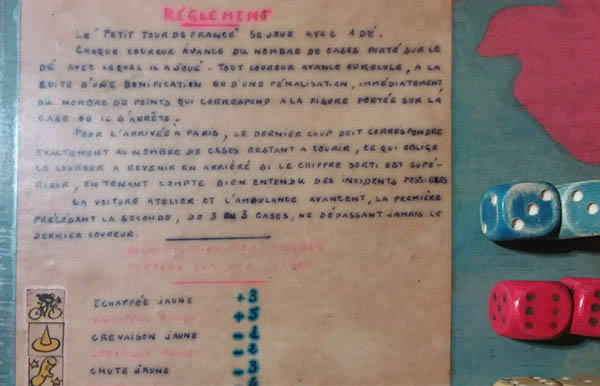
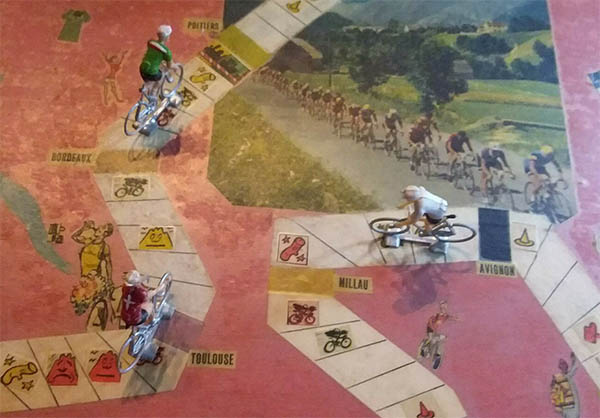
TOUR DE FRANCE, by Gael Giraudeau
Another game I found browsing the web, made by a guy from Lyon. Looks nice. (http://giraudeau.googlepages.com/societygames)
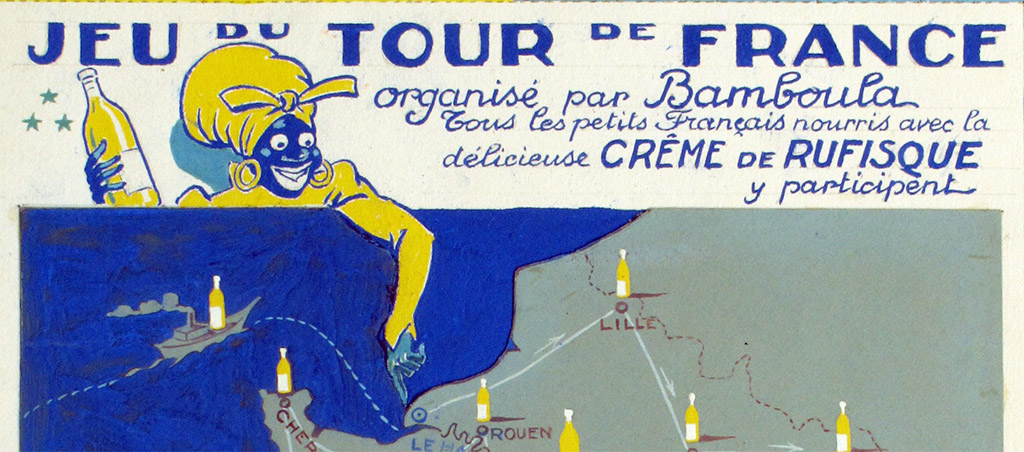
JEU DU TOUR DE FRANCE ORGANISÉ PAR BAMBOULA (Felix Lochard, 1920s)
Though this game was never published (at least as far as I know), it is a rather unusual prototype which deserves a webpage for itself. You can see it here.
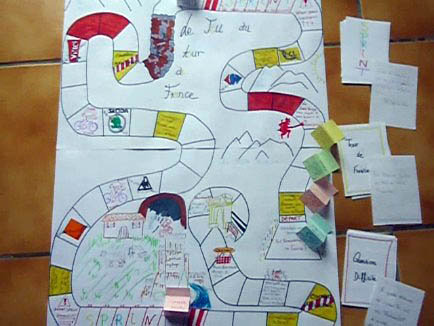
JEU DU TOUR DE FRANCE (emilie29/Skoda Fan Tour, 2014)
This can be seen in the Skoda Fan Club promotion for the 2014 Tour de France website. Thanks to Pascal Orsini for the tip.
TOUR DE FRANCE DICE GAME (Bernd Brucker, 2005)
In his book Die schönsten Würfelspiele (Heyne, München, 2005), Bernd Brucker describes a game called "Tour de France". I would hardly classify it as a cycling game, but... I am sure there must be more cycling-oriented dice games.
I stumbled upon this game while browsing the web. It is mentioned in an italian blog devoted to subbuteo. You can see more (and bigger) pictures, and even the rules here and here.
Hand-painted Cofalu riders in national teams, as you can see
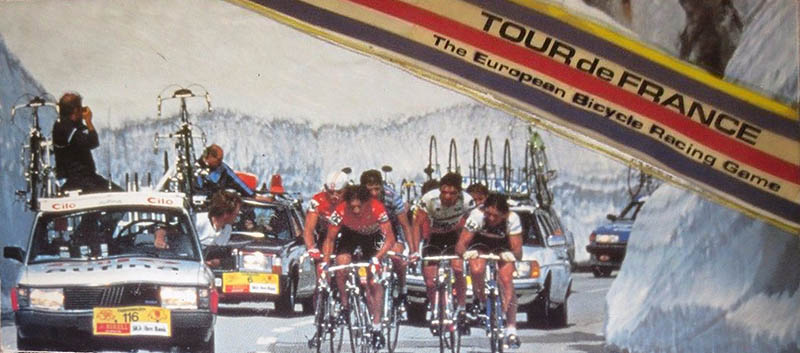
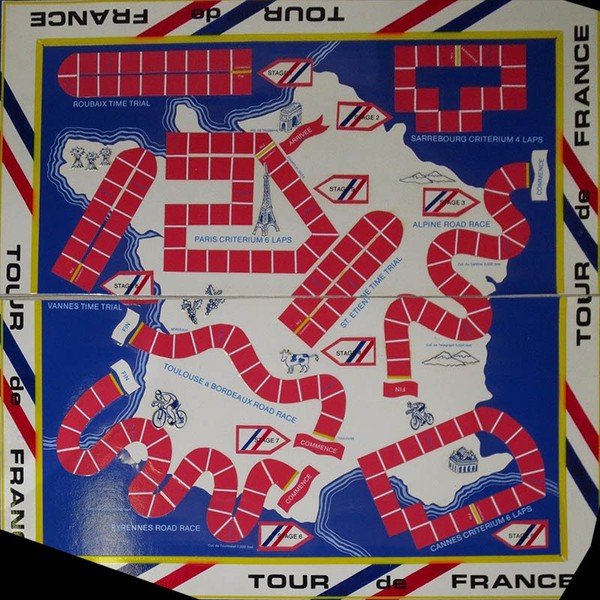
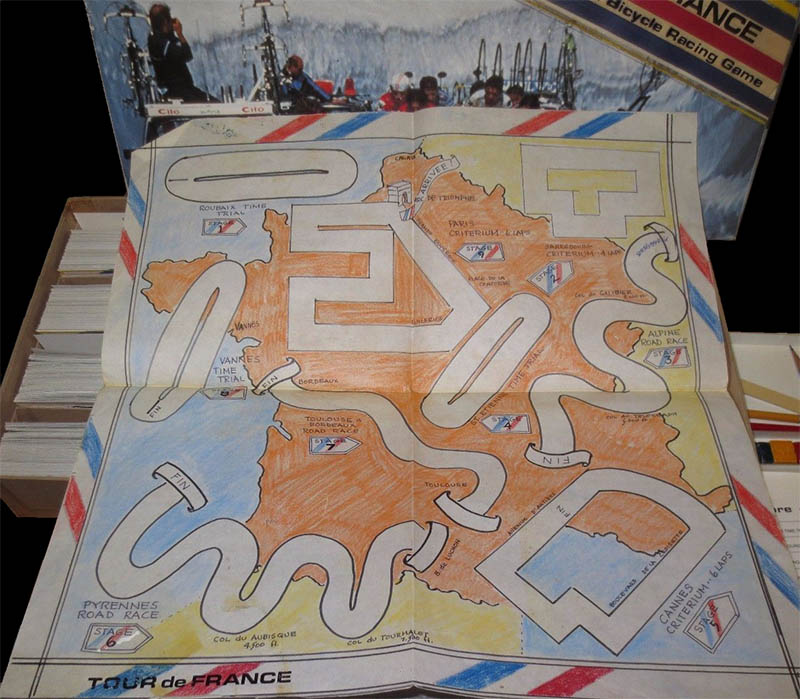
TOUR DE FRANCE, the European Bicycle Racing Game
This 70s-flavored game was offered for sale on eBay in the beginning of 2017, complete with hand-typed rules. It was auctioned, and most probably made, in the USA. A few weeks later my friend Dennis Frank emailed me saying that it was him who bought the game.
Not really a game but an idea from the Dutch online magazine SPELMAGAZIJN to play the different stages of a race with different games. If my Dutch does not betray me, the mountain stages were played with HOMAS TOUR, the flat stages with DER AUSREISSER and the time trial with some computer game. A nice idea!
TOUR DE FORCE (David Boon 2017)
A fine design made by graphic designer and visual artist David Boon, from Antwerpen, for his children and a few lucky friends. David tells me that only ten copies were printed (on what looks as an A0 vinyl). It is a simple roll-and-move game, but you can play different races, since the race incidents (numbers within circles) change between different races (same incidents in different places, actually). There are specific rules for the cobblestones sections, as might be expected from someone from Flanders. You can see a few more pictures here.
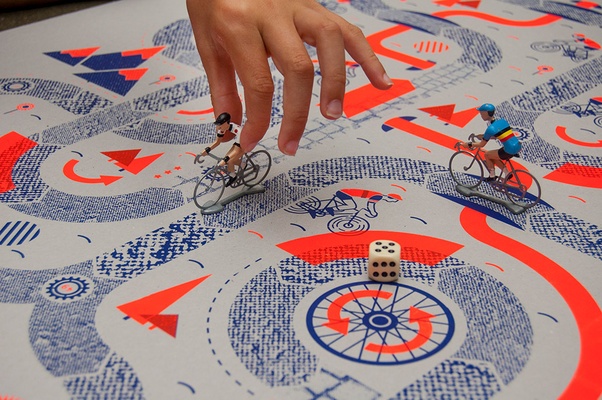
This one has a website: http://www.tour-game.com
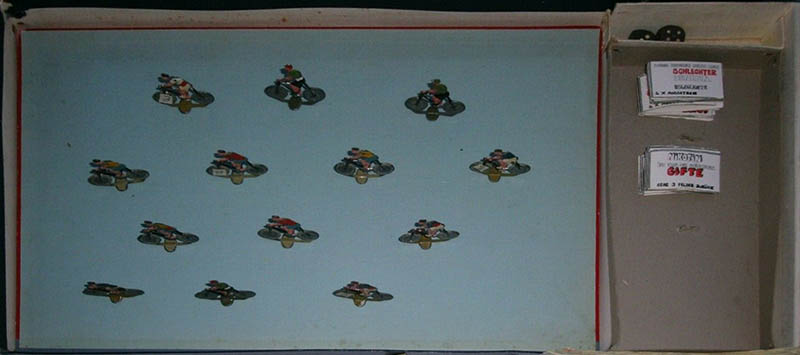
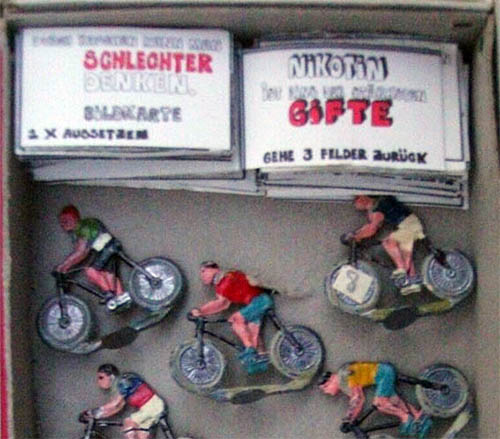
In October 2020 a "deluxe" box of the 1934 Tour de Suisse game was auctioned on eBay. Inside the box there were parts of a hand-made game which most probably used (some of) the game elements. I do not know who purchased this game or whether there were more precise rules included.
An unfinished project form my friend Richard Glanzer, from New York. He worked quite hard on it, as you can see from the cards.
1st version:
2nd version:
Last time Richard mentioned the game he looked quite disappointed about it not being such a good game as he had thought.(which is good: game inventors tend to think their game is the best game in the world, and even reality won't make them change their minds).
I hope Richard resumes working on this one. For the moment, here is a draft of the rules. If you feel you have something to bring to the game, drop a line and I will put you in contact with Richard.
Tim Krabbé (author of "The Rider") has been kind enough to send me a text he wrote back in 1987 for Elsevier Weekblad. The text is called TOURS and recalls the memories of some adults who used to play cycling games in their childhood. Some of them played their own board games (like Tim Krabbé himself, see "The Rider" game), others played dexterity games. Since the text is in Dutch (and although online translators do wonders these days), it will take a while for me to post it here :-(
TRACK CYCLING TOUR (Alberto Quintairos, Spain, 2022)
A new game by Alberto Quintairos. What is unusual about this game is the use of team trucks as part of the game.
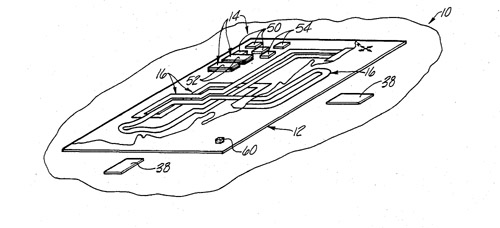
US Patents are freely available online. This game has Patent number 4,634,128. By the way, I seldom include Triathlon games on the website, I have to draw the line somewhere...
UNKNOWN / UNCREDITED / UNDOCUMENTED SELF-MADE GAMES
As I said above, unpublished games are much harder to find, and I feel I have to document them, even if I do not follow this site's general rule of including only games that I have or, at least, that I have had in my hands. Here are some games that I have seen for sale but not have been able to buy. I wonder who bought them. Needless to say, if you did or you know who did, and there is something else you want to share, I will be glad to hear it.
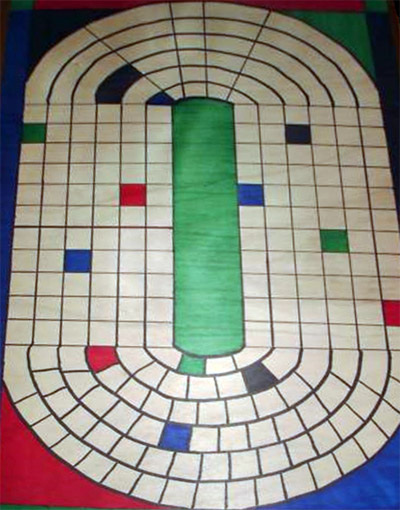
A) Colourful 120 x 80 cm wooden track offered on eBay in 2010 as a multi-purpose board (that means, with no particular rules). It was said to weight almost 5 kg (!). All I can add is that the seller was French.
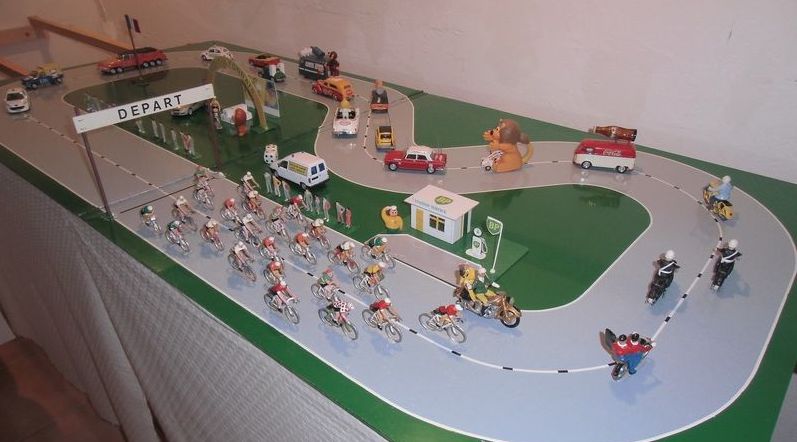
B) Game sold on eBay in july 2016. Unfortunately I was not able to buy it and probably the buyer just wanted the figurines. You may wonder if this is a boardgame, since no rules were mentioned, but notice the dice besides the "Départ" sign. All I can add is that the board was said to measure 164 x 77 cms.
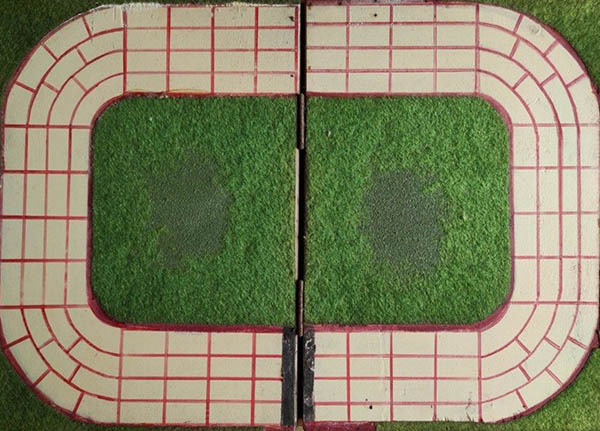
c) Wooden hinged velodrome complete with a nice mixed-lot of cyclists, probably from de 1960s, offered for sale in France sometime in 2021.
LE VEL D'HIV (Robert Bidault, 1950)
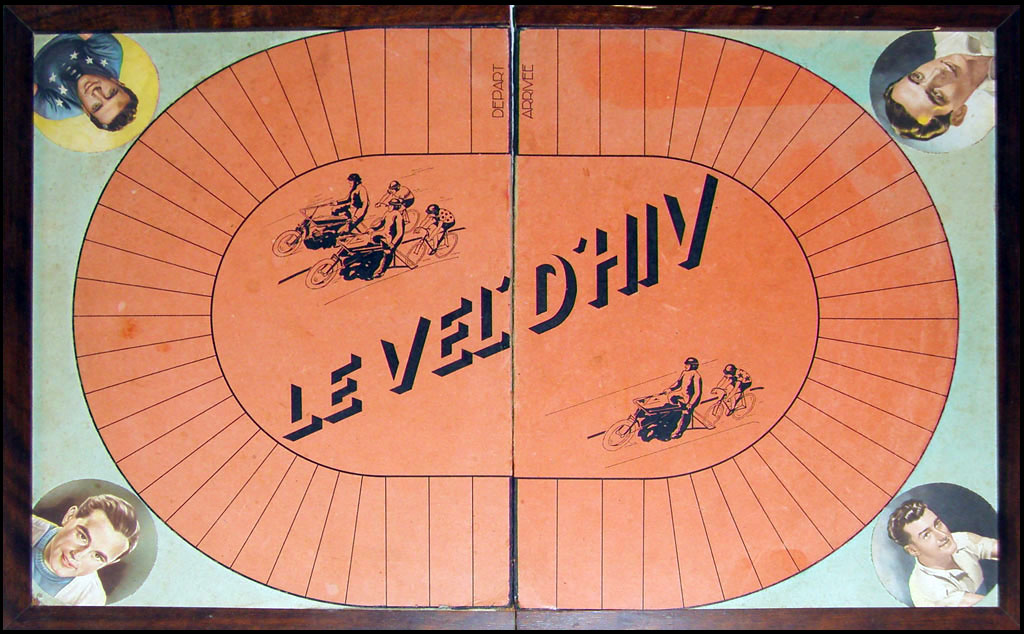
This game was created around 1950 by Robert Bidault, from Bayeux (France). Unfortunately the rules have been lost. According to his son Franck, who sent me these pictures, the game must have been similar to Le Jeu du Veldiv. I would not be so sure. This track has 60 squares, while HB's game has just 48. Of course you can play with HB's rules on this board, but then you can play almost any (simple) rules on any board. In this case, we will probably never know.
The game has 8 riders, nicely made of balsa wood. They are divided in four teams. Handwritten under the riders' base we can read the names of some popular cyclists of the time: Gerrit Schulte, Arie Van Vliet (blue team), Emile Carrara, Raymond Goussot (white team), Rik Van Steenbergen, Fausto Coppi (yellow team), Guy Lapébie and Achiel Bruneel (red team). As you can see, most of them are specialist track riders. Of course, track cycling is not so big now, and except Coppi and Van Steenbergen, these riders they are half-forgotten nowadays, but they were superstars in their time.

One of the things I love of running this website is the feedback I receive. Wnen I added this game to the website in 2012, I wrote: "Apart from the original rules, there is another mystery in this game. On the corners of the board there are pictures of four riders. Three of them are Fausto Coppi, Louison Bobet and Guy Lapébie. Neither Franck Bidault nor me have been able to identify the fourth rider. Of course we have checked the names written under the balsa riders, but none of them looks like the cyclist picture on the board (I admit I am not a good physiognomist, though). He is not compulsorily one of them (Bobet is depicted on the board, but his name is not written under any rider). All we know is that the pictures on the board come from 50's picture cards (for instance, you can find Lapébie's picture here)."
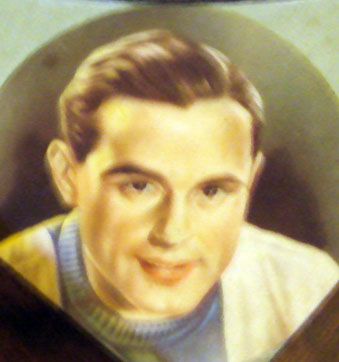
Who is this guy?
A couple of years passed without answers to my question, but then , in a few months time, two peiople have tried to give an answer to my question. First, Johan Vanhuyse, from Roeslare (Belgium), suggested that it might be Briek Schotte. It mades sense: Schotte won the World Championship in 1948 and 1950, so he was probably the world champion when the game was made. However, since the picture on the board is a drawing, instead of a photograph, Holwever, I was nor really sure, specially about the nose. (Check the pictures from Schotte at cyclingarchives.com).
Finally, in summer 2015, Marc Radenac, from France, found the correct answer: The cyclist is Louis Caput, 1946 French national champion. Marc was so precise that he even informed me that the four pictures on the board are, in fact, taken from a series of postcards issued as "Editions Sportives" by J Henzen drom San Remo (Italy). Knowing that, it is not difficult to find exactly the same picture on the internet (here is one, accessed on august 2015).
Thanks to both Johan and Marc for their contributions, for taking their time to make this site better, and, of course, congratulations to Marc for his vast knowledge. This was a tough one!
VELDIV FEMENINO (Alberto Quintairos, Spain, 2016)Alberto Quintairos makes games for his own enjoyment (check Giro Histórico in this same page). His new game deals with women track cycling. As you can see, he has used an old Veldiv board and a Sprint set of riders, upon which he has pasted women's teams jerseis. The rules, he tells me, are very simple. Of course, there are too few games about women sport (let alone women cycling), so this one is warmly welcome!
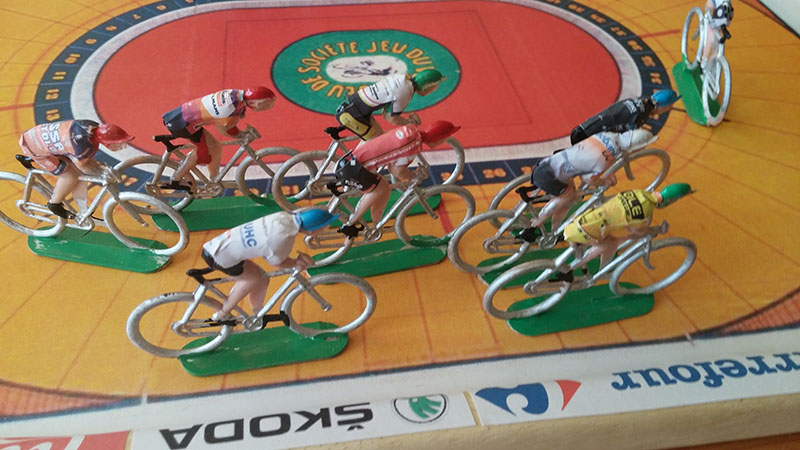
John Weber mentions this one on BGG: "Another one I have seen and actually played that was pretty good was a game called Velo or Velox that was an unpublished prototype. If I recall correctly, the game was designed by a Swiss and I was shown it by a Frenchman who happened to be in the USA for the World Diplomacy championships."
On a private email, he added: "Each stage was broken down into a number of turns, that could be flat, sprint, high mountains, or lesser mountains, then you had the peleton working at a particular rate of speed, breakaways, cyclists falling off the back, etc. It had a fairly realistic feel to it -- and hey, I won the race! -- and a cool feature was you could slip the yellow jersey on the cyclist's back (these were paper cyclists printed out on a desktop -- nothing fancy) -- but the game was pretty good, sorry not to see it make it into production."
Thanks, John!
UPDATE: It looks like the game was designed by one Guillaume Albasini (or Albasani) from Switzerland, who is probably the same guy who designed the Formula One game called F-Cartes. Needless to say, if someone knows how to contact him, let me know.
VENTOUX, by David Sachs
Written in October 2020:"Ventoux" is a cycle board game of strategy and chance. The race covers three distinct, varying terrains each of which favours different riders’ abilities. To win you need to get all your team across the finish line of the multi terrain stage event finishing on the summit of Mont Ventoux. All riders count. Riders are placed and team with lowest aggregate placing wins. David Sachs has been working on this game, on and off for quite a while. The rules are promising but not definitive yet. The design hasn’t made much progress either, but David tells me he sees it "as a picture board dominated by Mt Ventoux with some colourful Provençal sunflowers for the flat section".
UPDATE May 2024:This game has been published as "Race To Ventoux". Click here to read more about it..
Another game from my friend Yann from Paris (author of Baroudeur, see above). This one has been developed in 2010 (among other cycling games, looks like he has had an interesting summer). Unfortunately Yann does not publish the rules of his games, but he sends them to his friends. What is interesting about this one is that he uses the elements of Laurent Fignon's game and makes a completely different game (and a better one, I may add, though this was not too difficult).
I haven't played the game yet, but it looks very interesting. It uses some elements of Yann's PBEM Tour de France game and, above all, it is one of the few games that play a full stage race in a single gaming session, which is one of the things I miss in cycling games. (Of course, the original Fignon game also plays a stage race in a single session).
However, if YOU want to play this game you will need to (a) get a copy of the Fignon game, (b) buy a deck of cards and possibly some extra counters, and (c) contact Yann and convince him to send you the rules. If you live in Paris it might be easier, since Yann is always in the need of play-testers.
 |
 |
 |
 |
 |
|
CULTURE IDEAS |
TOTUM REVOLUTUM THUMBNAILS |
NAMES ALPHABETICAL |
CATEGORIES LISTS |
WHAT'S NEW BLOG |